Insights
RCS for SaaS: How technology companies use it across the customer lifecycle
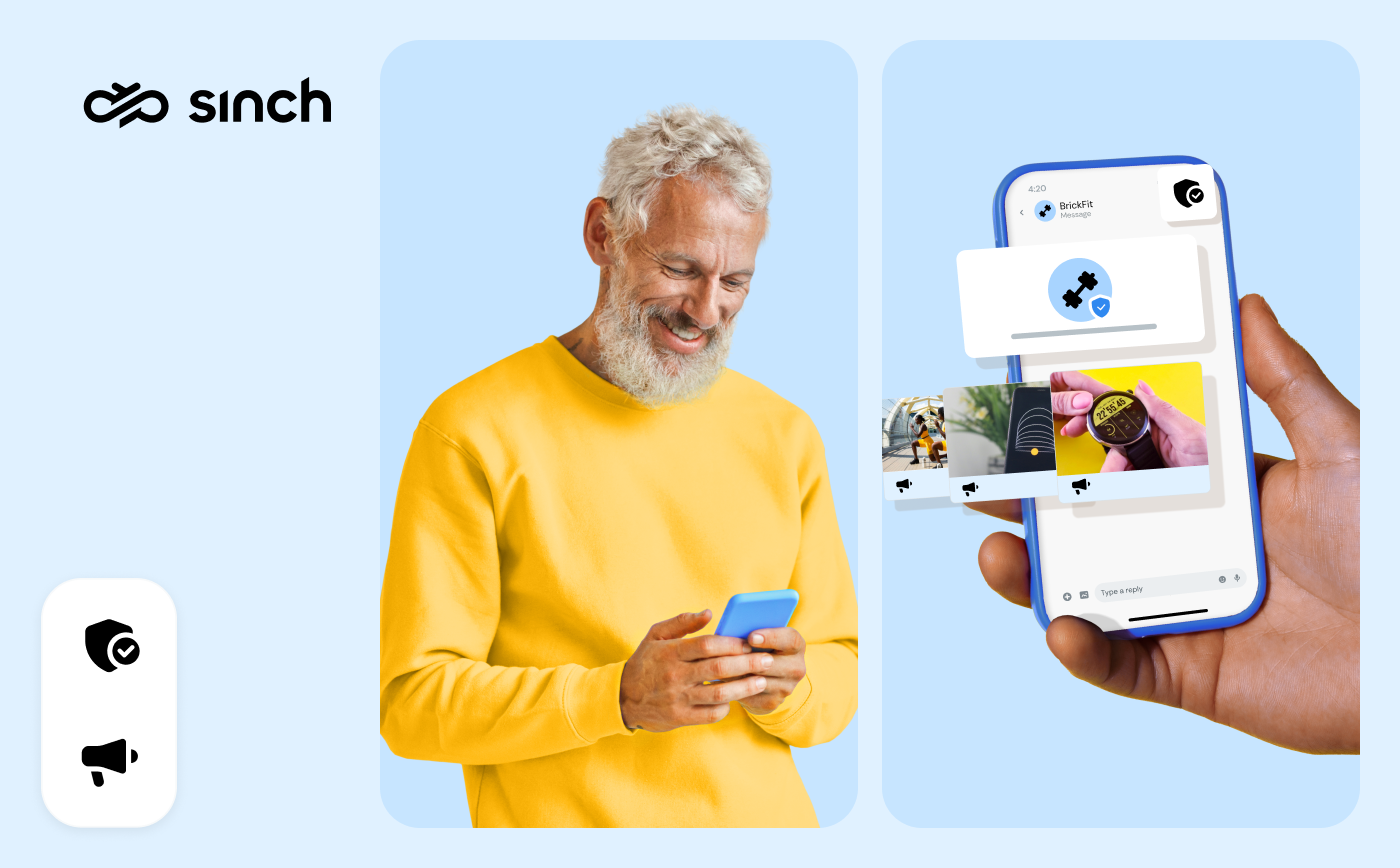
RCS for SaaS is Rich Communication Services used by technology and software companies to deliver branded, interactive lifecycle messages – onboarding nudges, verification codes, billing alerts, renewal reminders, and support – straight into a user’s native phone inbox, with automatic SMS fallback when RCS isn’t available. For a subscription business, that means the moments that decide activation, retention, and renewal land somewhere people actually look, from a sender they can verify.
The catch is that RCS isn’t right for every SaaS. If your users live in desktop email or your market has thin carrier coverage, the payoff shrinks. So the real question isn’t “is RCS good?” – it’s “does RCS fit the way your users already communicate?”
In this guide, we’ll define RCS for a SaaS context, show why tech companies are adopting it, walk through six lifecycle use cases with a real customer example, and give you an honest framework for deciding whether it belongs in your stack.
What is RCS for SaaS?
Rich Communication Services (RCS) is the GSMA messaging standard (Universal Profile) that upgrades SMS with branding, rich media, and interactivity in the phone’s native inbox. Google is its biggest implementer through Google Messages, but the standard belongs to the mobile industry, not to any single company.
For a SaaS or technology business, the relevant flavor is RCS for Business (previously called “RCS Business Messaging” or “RBM”) – the application-to-person (A2P) channel. Instead of a plain text from an unknown number, your onboarding tips, login codes, and renewal notices arrive from a verified sender profile with your logo and name, and can carry buttons, carousels, quick replies, and video. When a device can’t receive RCS, the message falls back to SMS automatically, so no user is left out.
Think of it as turning transactional texts – the ones your product already depends on – into interactive touchpoints that look and behave like your app.
Why SaaS companies are adopting RCS
Technology leaders aren’t experimenting at the margins. In Sinch research surveying over 2,800 consumers and 400 U.S. technology executives, adoption is well under way:
- 39% of technology companies already use RCS for customer communication, and another 42% plan to adopt it soon. That puts tech among the fastest-moving verticals in the State of RCS data.
- 87% of tech leaders are at least somewhat familiar with RCS for Business, and 95% of those who know it hold positive views of its potential.
- When asked about the top benefit, 42% of tech leaders named improved security, ahead of better personalization (38%) and cost efficiency (34%).
The security signal matters for a SaaS audience because so much of the relationship runs through verification and account-safety messages. Here the numbers are decisive:
- 59% of consumers prefer RCS over SMS or MMS for receiving verification codes.
- Nearly 80% of consumers say visual cues like an official logo or checkmark make them more likely to trust a message’s legitimacy.
That combination – a verified brand identity plus interactivity – is why RCS resonates with product and growth teams whose whole job is to reduce friction. And the reach is there to scale into: RCS reaches around 1.5 billion users globally, including 250 million in the U.S., where over a billion RCS messages are sent every day.
“Tech companies are built to innovate, but when it comes to communication, even the most advanced teams realize the need for simplicity, integration, and trust.”

How SaaS companies use RCS across the customer lifecycle
RCS earns its place when it improves a moment that already matters to your metrics. For subscription businesses, those moments map onto the customer lifecycle – from first login to renewal:
| Lifecycle stage | What to send over RCS | Why it works |
| Onboarding & activation | Branded welcome flows, setup checklists, video walkthroughs, quick-reply prompts | Guides users to the “aha” moment without leaving the inbox; lifts activation |
| Identity & login | OTPs, password resets, new-device alerts from a verified sender | 59% prefer RCS for codes; verified branding cuts phishing risk |
| Usage & billing | Usage thresholds, invoices, renewal reminders with one-tap pay | Prevents involuntary churn and failed payments; reduces “surprise bill” tickets |
| Retention & expansion | Churn-risk nudges, win-back offers, upgrade prompts, plan comparisons | Reaches at-risk users on a channel they open; drives expansion revenue |
| Product & announcements | Feature launches, carousels, beta invitations, changelog highlights | Puts new value in front of users who ignore product emails |
| Support | AI chatbots for tier-1 issues, escalation to live agents, threaded history | Deflects repetitive tickets while keeping context in one conversation |
Here are the six that matter most for a SaaS.
Onboarding and activation nudges
Activation is where subscriptions live or die, yet many onboarding flows still lean on unopened emails and in-app alerts users never see. RCS delivers branded, step-by-step guidance – setup checklists, quick-reply prompts, embedded links, and short video tutorials – to the one inbox almost everyone checks. Because it comes from a verified sender, users know it’s really you, not a phishing attempt asking them to “confirm your account.”
OTP and identity verification
Verification is the most natural entry point for a SaaS. One-time passwords (OTPs), login alerts, and password resets are high-stakes messages where trust and deliverability decide whether a user gets in or gives up. RCS OTPs arrive from a verified profile – your brand, not a random shortcode – which directly addresses the phishing anxiety around authentication texts. With 59% of consumers preferring RCS for codes and SMS fallback covering everyone else, it’s a low-risk place to start.
Pro tip: RCS for Business is encrypted in transit but is not end-to-end encrypted, so use it for the verification prompt and delivery, not to transmit anything you’d classify as confidential or regulated data. More on that in the fit section below.
Usage and billing notifications
Involuntary churn – the subscription that lapses because a card expired or a renewal notice was missed – is one of the quietest revenue leaks in SaaS. RCS turns billing into something users can act on: visual invoices, usage-threshold alerts (“you’ve used 80% of your plan”), and renewal reminders with a one-tap payment button. The interactivity is the point – a rich message type with a pay-now button converts far better than a text that tells someone to log in and dig for the billing page.
Churn prevention and renewal campaigns
Retention teams already run win-back and renewal campaigns; RCS gives them a channel with the reach of SMS and the expressiveness of an app. Send a churn-risk nudge with a quick-reply survey, a plan-comparison carousel to make an upgrade concrete, or a renewal offer users can accept in one tap. RCS marketing campaigns deliver 3 to 7 times higher click-through rates than rich SMS – exactly the lift a renewal flow needs.
Product announcements and feature launches
The average product-update email is a graveyard. RCS puts new value where users will see it: a carousel showing a feature in action, a short video snippet, an “Upgrade now” button, or a beta invitation to your power users. For a product-led SaaS, that’s a direct line between shipping something and getting people to try it.
Support deflection and self-service
Support is often the first place tech leaders point AI, and RCS is a secure, branded home for it. Deploy chatbots to handle tier-1 questions – password resets, how-tos, billing lookups – with a clean escalation path to a live agent and the whole conversation kept in one thread. The result? Fewer repetitive tickets, and a support experience that feels like part of the product.
RCS for SaaS in action: EasyPark Group
EasyPark Group, the world’s leader in digital parking, runs apps for millions of drivers across more than 20 countries – a consumer-facing tech platform with the same core needs as any SaaS: secure logins and reliable, timely notifications.
EasyPark had been juggling multiple SMS vendors, with deliverability that varied market to market. After consolidating messaging with Sinch, the team added RCS for verification codes and parking-session reminders, sending them from a verified sender profile so drivers could see – via the logo and blue checkmark – that messages genuinely came from EasyPark.
They piloted RCS in Germany. The results:
- 97.4% delivery rates in Germany
- 40% of messages sent over RCS, with SMS fallback covering the rest
- A branded, secure experience that reinforced trust from the first login
“Once a customer downloads our app, they’re someone that we want to hang on to for their driving life. Forming that trust early, making them feel secure, protecting their account information, is super critical. And I think that’s where things like RCS can really help.”

Just as telling: EasyPark’s team shipped its RCS proof of concept in about a sprint, with no new integration – a reminder that adding RCS to an existing messaging setup is closer to a feature flag than a rebuild.
Is RCS right for your SaaS?
RCS is a strong fit for many technology companies, but not all. Be honest about three things before you invest.
Where your users actually communicate. RCS shines when your audience is mobile-first and reachable by text – consumer apps, prosumer tools, mobile-heavy products. If your users are B2B buyers who live in desktop email and Slack, and who rarely give out a mobile number, email and in-app messaging may serve onboarding and announcements better than RCS. Match the channel to the behavior, not the hype.
Regional and carrier coverage. RCS requires an Android device (or an iPhone on iOS 18 or later) with a data connection and carrier or Google support; RCS for Business on iOS is rolling out in key markets and is Apple- and carrier-dependent. Coverage is broad and growing in markets like the U.S., but it’s uneven globally. The mitigation is built in: automatic SMS fallback means a recipient who can’t receive RCS still gets the message as a text, so you never trade reliability for richness.
How sensitive your data is. RCS for Business messages are encrypted in transit but are not end-to-end encrypted – Google and aggregators can technically access content, though the channel carries strong compliance credentials (ISO 27001, SOC 2, SOC 3, GDPR, and PSD2). Cross-platform person-to-person E2EE between iPhone and Android is rolling out in beta under Universal Profile 3.0 following iOS 26.5, but that does not extend to business messaging. For marketing, onboarding, billing, and verification prompts, RCS is a major upgrade over plain SMS. For transmitting confidential or regulated data (think HIPAA or PCI), evaluate a channel built for it and read up on RCS security first.
If your users are mobile, your markets are covered, and your messages are the everyday transactional and lifecycle kind, RCS is very likely worth a pilot.
Frequently asked questions about RCS for SaaS
RCS for SaaS is the use of Rich Communication Services by software and technology companies to send branded, interactive messages – onboarding, verification, billing, renewal, product, and support – into a user’s native phone inbox, with SMS fallback when RCS isn’t available. It upgrades the transactional texts a SaaS already sends into app-like, verified touchpoints.
It depends on where your users are. For mobile-first, consumer-facing products, RCS onboarding nudges reach a far more-checked inbox than email and support quick replies and video inline. For B2B products whose users live in desktop email, email may still carry the heavier onboarding content. Many SaaS companies use both – RCS for time-sensitive nudges, email for depth.
Yes, for the verification use case. RCS for Business is encrypted in transit and lets you send OTPs from a verified sender profile, which reduces phishing risk – a big reason 59% of consumers prefer RCS for codes. It is not end-to-end encrypted, so don’t use it to transmit confidential or regulated data; use it for the verification prompt and code delivery.
No. RCS lands in the phone’s native messaging inbox – Google Messages on Android, and Apple Messages on iPhones running iOS 18 or later where RCS for Business is available. There’s nothing to download. If a device can’t receive RCS, the message arrives as an SMS instead.
Most send RCS programmatically through an API. You register and verify an RCS agent, then send via a messaging API that handles capability checks and SMS fallback for you. See the enterprise guide to sending RCS via API for the developer steps, or browse RCS use cases and examples for more patterns across functions and industries.
Get started with RCS for your SaaS
Adding RCS doesn’t mean rebuilding your communication stack. The fastest path is to pick one high-value lifecycle moment – usually verification or onboarding – prove it, and expand.
RCS turns the transactional messages your product already depends on into branded, interactive experiences users trust. With Conversation API, you integrate once and reach users over RCS with automatic SMS fallback built in; with Sinch Engage, your team can launch RCS campaigns with no code.
Want the full picture first? Explore these resources:
- What is RCS messaging? The complete guide
- RCS OTP: Verification your users can trust
- An enterprise guide to sending RCS via API
- RCS use cases and examples for your business
- RCS statistics: adoption, engagement, and market data
Ready to find the right RCS use case for your SaaS? Get in touch – our team can help you build a phased rollout and measure results, so every message drives real impact.

Author: