Insights
RCS for healthcare improves patient engagement and protects productivity
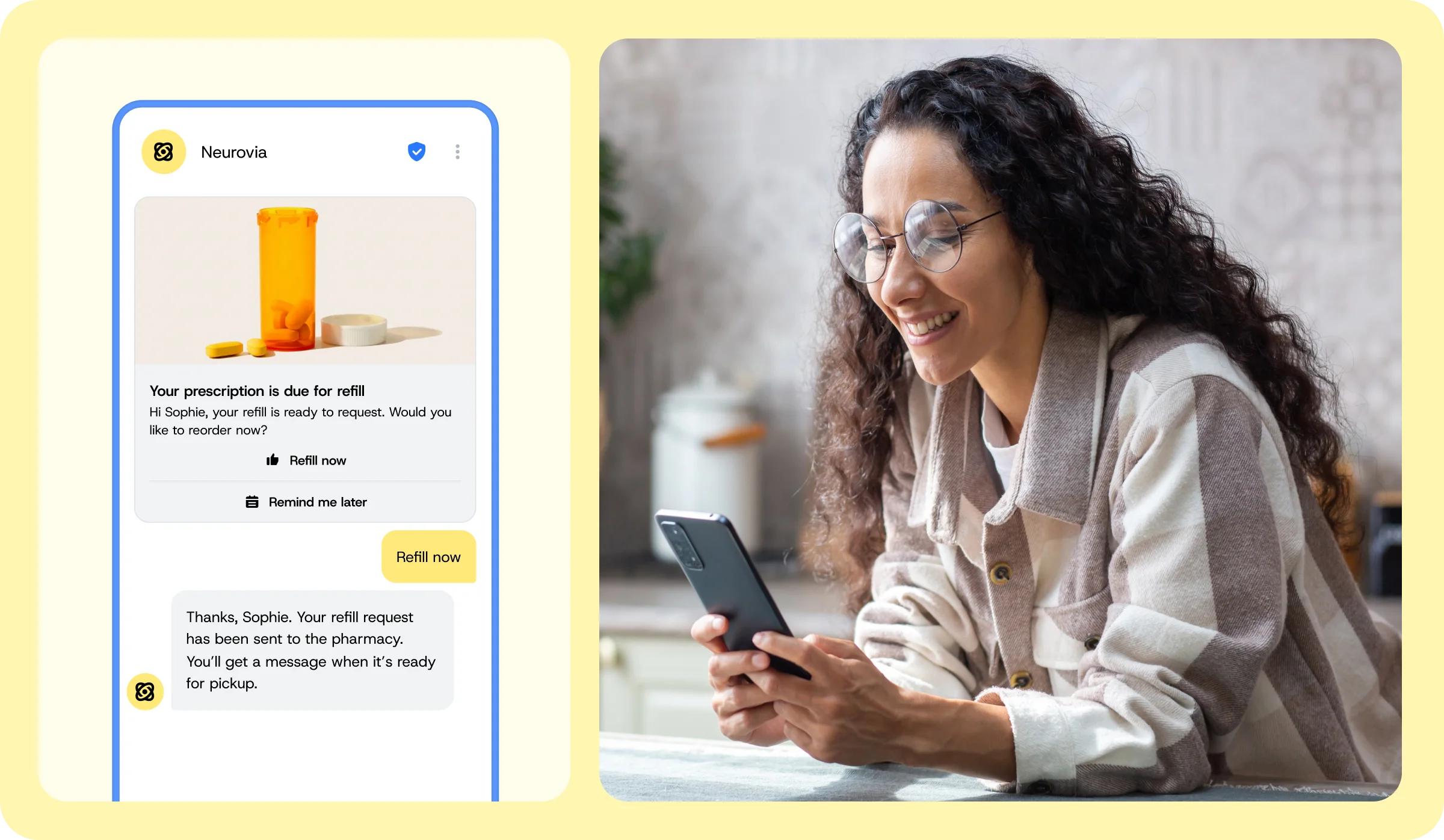
When patients stop trusting the messages they receive, they stop acting on them. Appointment reminders get ignored. Reschedule requests pile up. And no-show rates skyrocket. This isn’t because patients stopped caring — the communication channel let them down.
That’s the real cost of sticking with plain messaging when your patients expect more.
Rich Communication Services (RCS) gives healthcare organizations a way to close that gap — bringing branded, interactive experiences to the messaging inbox patients already use, in a way that’s easier to recognize, trust, and act on.
Diagnosing the no-show problem in healthcare
According to the Medical Group Management Association (MGMA), average no-show rates dipped during the COVID-19 pandemic before rebounding to around 7%. In 2026, the MGMA found that around one in three responding medical groups said no-show rates were climbing again.
Before the pandemic, missed appointments were already costing the healthcare industry an estimated $150 billion a year. But the impact doesn’t stop at revenue.
A year-long study of nearly 25,000 appointments at a pediatric ear, nose, and throat clinic found that more than 4,600 were no-shows, costing the clinic between $276,831 and $959,908 in annual provider revenue, along with thousands of lost work RVUs. Researchers concluded the pattern represented a substantial hit to both productivity and clinical capacity.
And the consequences go beyond just numbers. When patients miss appointments, they miss care. That means deteriorating health, delayed diagnoses, and reduced access to in-demand services like medical imaging. Healthcare no-shows don’t just affect the patient who doesn’t turn up. They affect everyone waiting for a slot that opened up too late.
Why RCS is easier to trust and harder to ignore
SMS appointment reminders have long been the standard. And basic text can still do the job. But SMS was never designed for the kind of trust-building that healthcare communication requires.
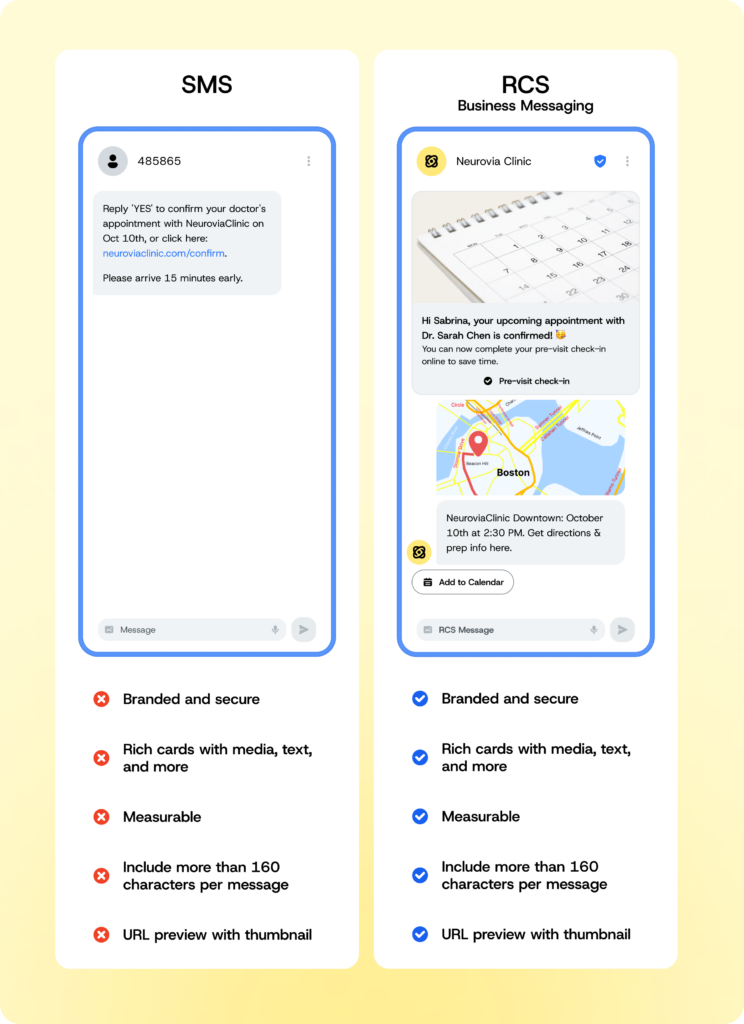
With RCS for Business, every message arrives with a verified brand name and recognizable logo — not an unfamiliar short code buried between spam and smishing attempts. Patients see exactly who the message is from before they even read it.
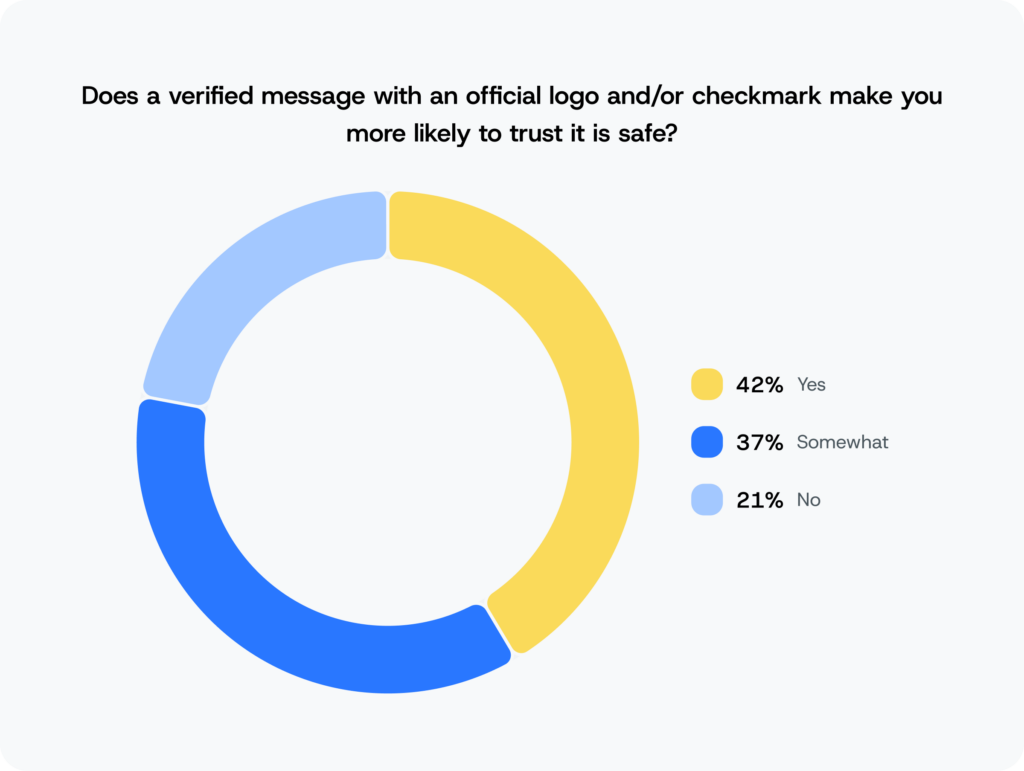
This visible, verified identity makes a real difference. Our research on customer communication preferences found that a combined 79% of global consumers view branded and verified mobile messages as at least somewhat more trustworthy. In a channel crowded with fraud, that’s not a small thing.
RCS also builds the kind of patient loyalty that’s harder to measure but easy to lose.
A survey from Accenture found that around 80% of digitally engaged patients are likely to remain with their current provider. 90% say they completely trust their provider. Better communication drives that engagement.
The RCS security and HIPAA compliance question
This is a big question for healthcare providers in the United States, and it depends heavily on the type of messages you’re sending.
RCS for Business messages are encrypted in transit and at rest, but they are not end-to-end encrypted. That means RCS, like SMS, is not a HIPAA-compliant channel for messages that contain protected health information (PHI). Appointment reminders, general health tips, and educational content are fine. Anything tied to a patient’s personal medical data should stay behind a secure, authenticated environment like a patient portal.

Sinch offers HIPAA-compliant support for email, voice, and fax communications. And our infrastructure already has the administrative, physical, and technical safeguards in place — validated by third parties like BDO USA — so that when RCS encryption standards evolve, we’re ready to adopt them quickly.
The practical takeaway: RCS is a powerful channel for healthcare when used within the right guardrails. There’s plenty of room to improve patient engagement without ever touching PHI.
How to use RCS for better patient engagement
The good news: most of what healthcare organizations need to communicate doesn’t involve PHI at all.
Starting with appointment reminders, an RCS version can include quick reply buttons that let patients confirm, cancel, or reschedule directly from the message — no phone call required.
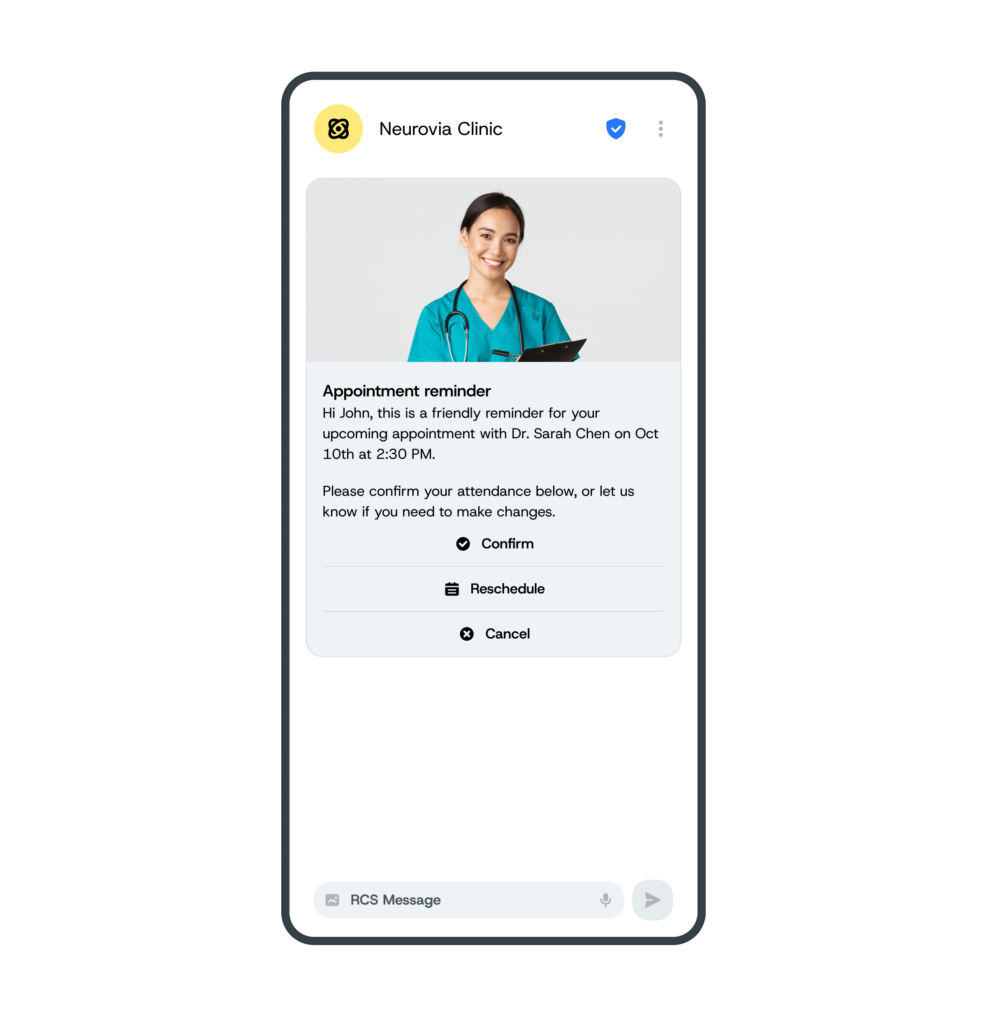
Before a visit, RCS can prompt patients to complete digital forms and questionnaires ahead of arrival, streamlining check-in and reducing front-desk friction. After a visit, follow-up messages can invite patients to take an interactive survey, giving your organization feedback it can actually use.
You can also connect RCS communications with patient portal platforms and health record systems like Sinch’s Epic MyChart integration.
A 2025 Epic Research analysis of more than 1.6 billion outpatient visits found that patients with an active patient portal account were 21.5% less likely to no-show. Epic estimated the difference accounted for more than 21 million fewer missed appointments in 2024.
Patient education is another excellent use case for RCS. Rich content formats like carousels, videos, and embedded links give patients a better way to understand their health plan, start a new medication, or prep for a procedure. This kind of proactive patient outreach supports better outcomes before patients even walk through the door.
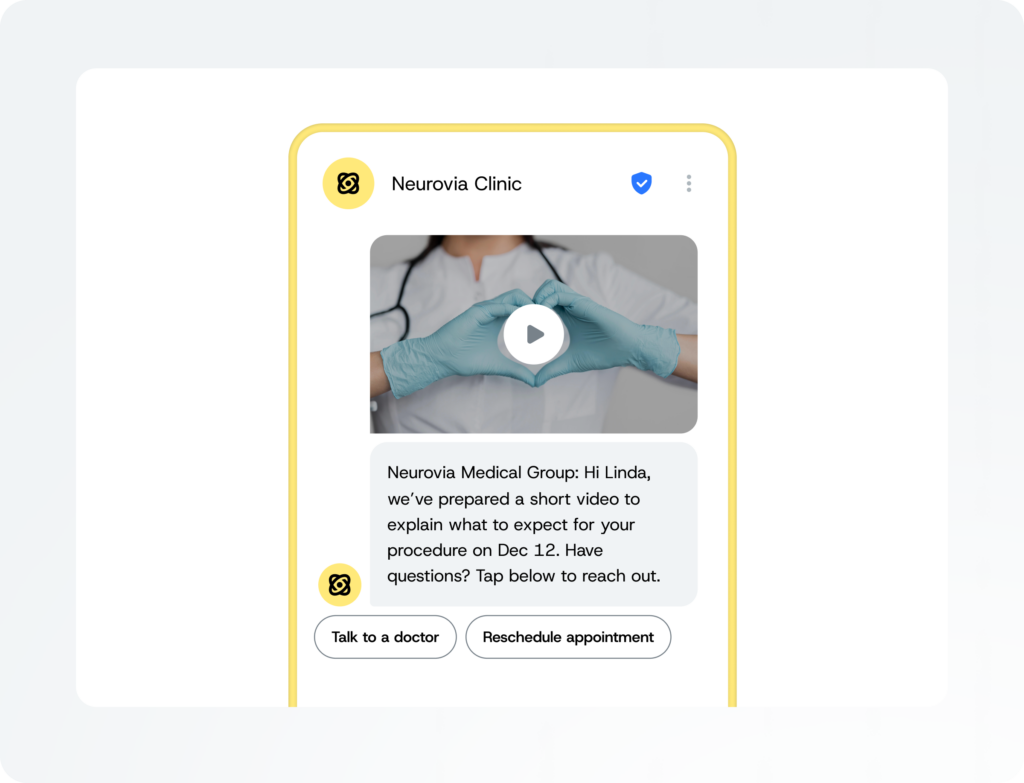
RCS gives patients more ways to help themselves
One of the most practical benefits of RCS for healthcare is it reduces the volume of routine requests that end up in your call center.
Think about what happens when a patient gets an SMS reminder and needs to change their appointment. If their only option is to call, a simple scheduling change creates work for both the patient and your staff. RCS turns that interaction into a self-service moment: the patient taps a button, the change is made, and your team doesn’t need to get involved.
That shift matters at scale. When patients can handle routine tasks directly from a message — rescheduling, completing intake forms, accessing educational content, getting directions to a clinic — your team spends less time on low-complexity requests and more time on the conversations that actually require a person.
Self-service also improves the patient experience. A faster path to what they need, without the frustrating hold queue.
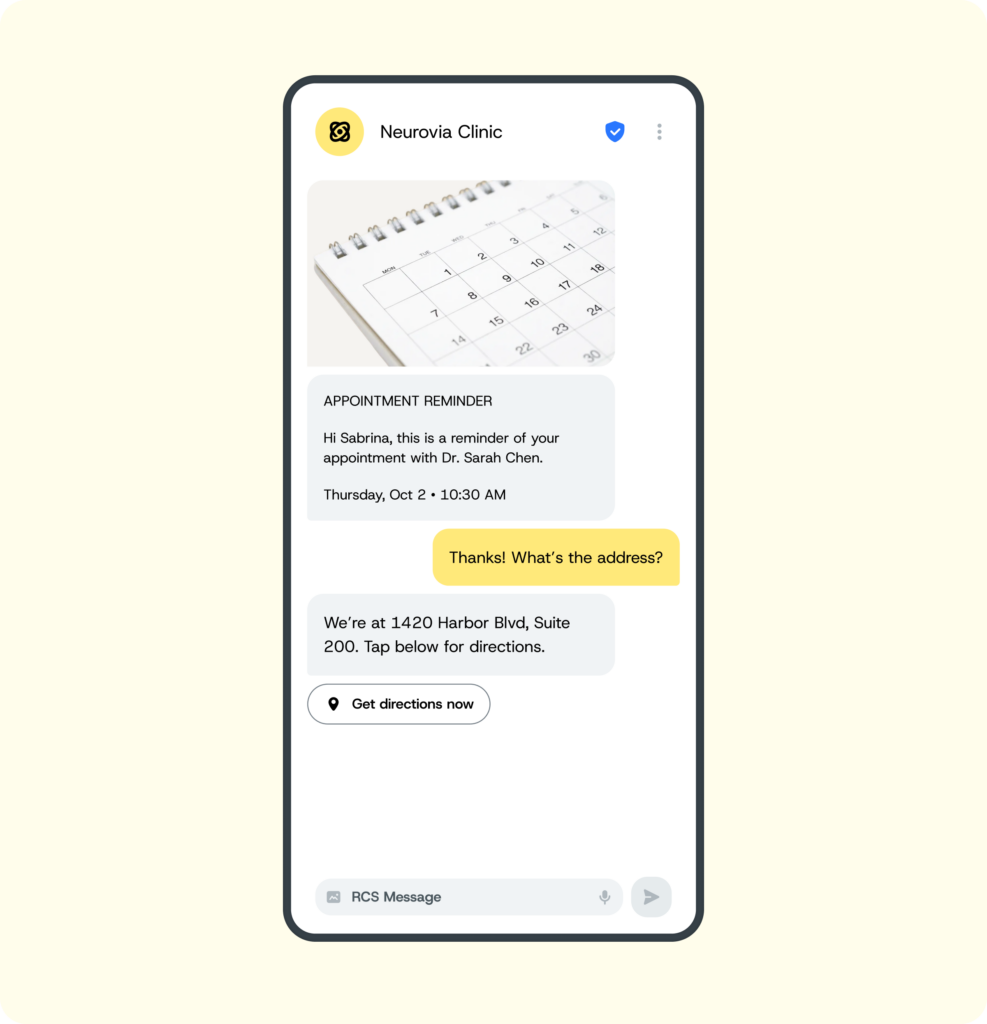
Upgrade your patient communications to RCS for healthcare
You don’t have to rebuild your messaging infrastructure to get started with RCS.
RCS works alongside your existing SMS program. Messages are delivered as RCS when a patient’s device and network support it and automatically fall back to SMS or MMS when they don’t — so no patient gets left behind.
For existing Sinch SMS customers, the path is even simpler. Sinch RCS Upscale lets organizations add RCS capabilities to their existing SMS program without changing the integration they already rely on.
“Sinch’s RCS Upscale service is remarkably easy, and the dedicated support from their team has been great.”
Sinch connects messaging, email, and voice with healthcare workflows and EHR platforms like Epic, giving you the infrastructure to build a better patient communication experience on top of what you already have.
Ready to see what RCS can do for your patients?
Explore Sinch healthcare communications solutions and start your RCS journey.

Author: