Insights
Why tech and SaaS leaders are choosing RCS to build trust at scale

Consumers expect everything to work quickly and securely when they interact with tech and SaaS companies. But even the most advanced systems can fall short when communication tools don’t keep up with these expectations.
To understand how leaders are closing that gap, Sinch surveyed over 2,800 consumers and 400 U.S. technology executives about how they connect with customers. And the results show a clear shift: The tech industry is moving fast toward Rich Communication Services (RCS), a messaging protocol built for trust, scale, and interactivity.
In this post, we’ll break down what tech consumers expect from brands they interact with, how industry leaders are responding, and why RCS is emerging as the channel of choice for technology and SaaS organizations.
What tech and SaaS companies are up against
Consumers expect things to just work when they interact with tech and SaaS companies – from quick onboarding support to instant answers and secure interactions, every time. But even for the most advanced brands, a few familiar challenges stand in the way:
- Integration. Around 40% of tech companies say integration issues are among their top communication challenges.
- Security and privacy. 44% of businesses across industries say security and privacy are among their biggest communication hurdles.
- Cost. Managing the cost of customer communications is also among the top challenges for 39% of business leaders across industries.
Despite these challenges, more than 85% of tech leaders say they plan to invest in communication this year – and for many, RCS is one of those investments.

“Tech companies are built to innovate, but when it comes to communication, even the most advanced teams realize the need for simplicity, integration, and trust.”

Why RCS is great for tech and SaaS organizations
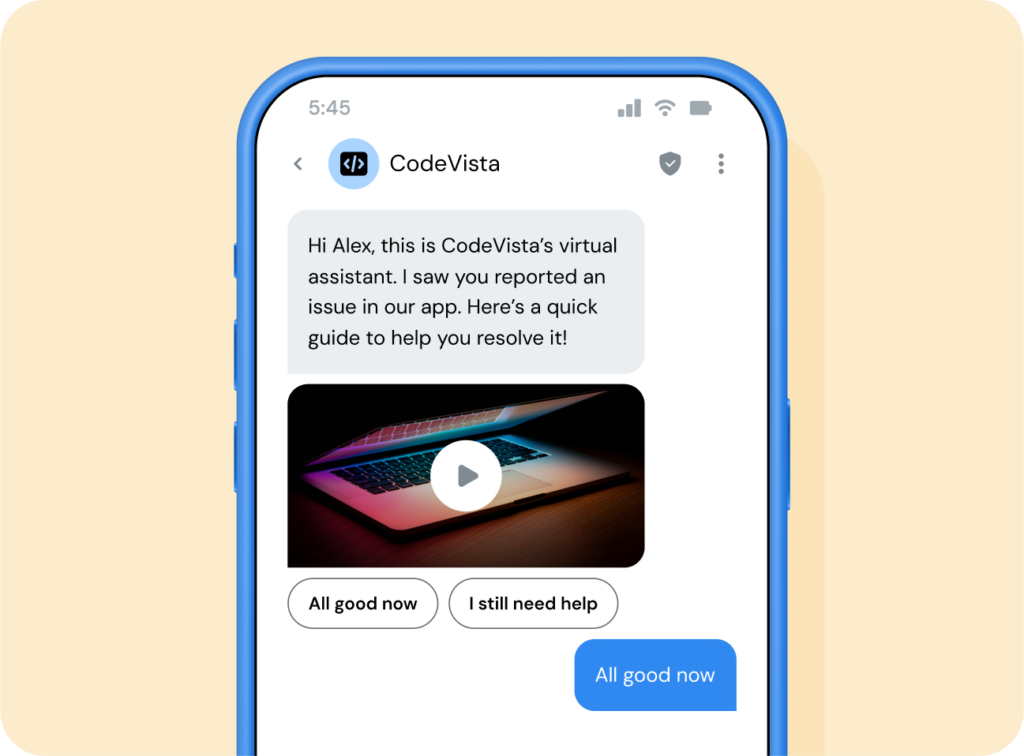
RCS brings verified sender profiles, branding, and interactive features into the native mobile messaging inbox. It’s an opportunity to deliver rich, secure, and interactive experiences where users already are, without forcing them to download a new app or open an email.
According to Sinch research:
- 87% of tech leaders are at least somewhat familiar with RCS for Business and its capabilities.
- 39% of technology companies already use RCS for customer communication today, and another 42% plan to adopt it this year.
- 95% of tech respondents who know RCS say they have positive views on its potential impact.
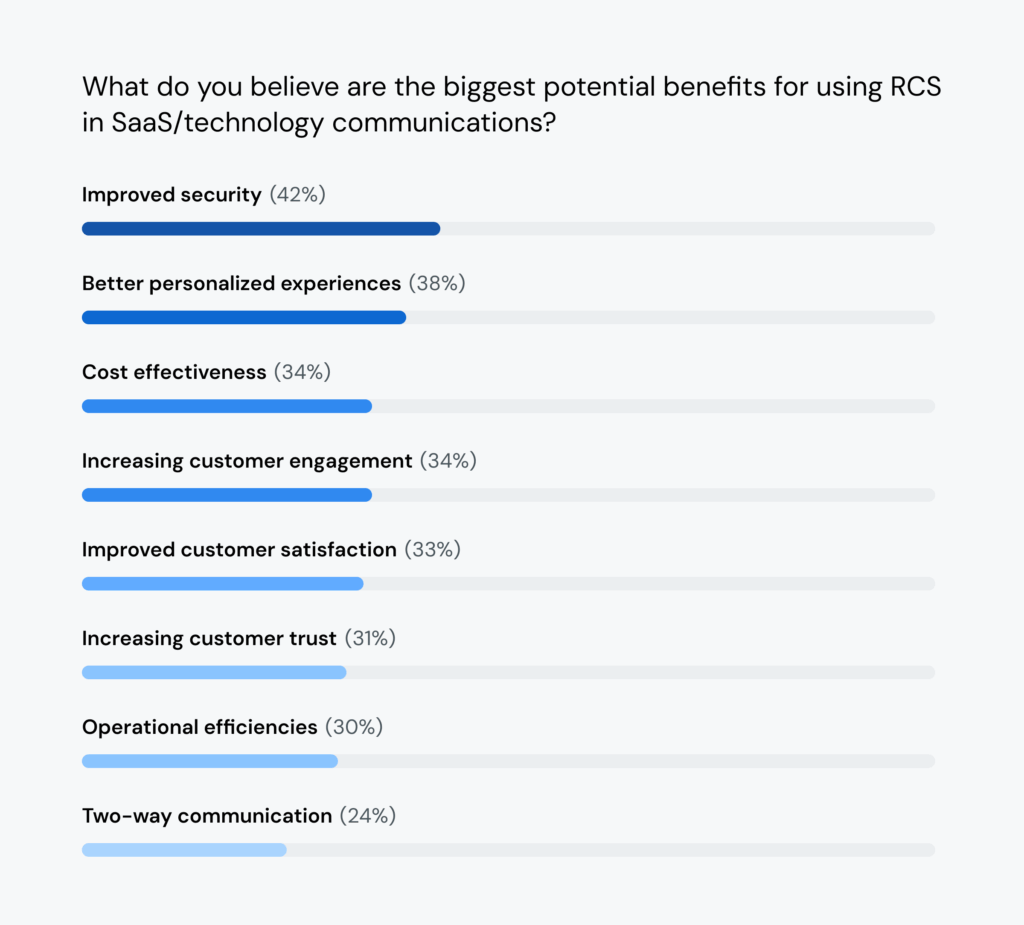
When asked about the top benefits of RCS adoption, 42% of tech leaders pointed to improved security, followed by better personalization (38%) and cost efficiency (34%).
RCS is clearly resonating with technology and SaaS leaders for a reason, perhaps because it combines the reliability of SMS with better security and the possibility of adding the interactivity of modern messaging channels. Let’s look next at a few key ways that tech and SaaS companies can use RCS for customer communications.
Use cases for RCS for tech brands
RCS helps tech companies bring their communication up to the level of their products – interactive, secure, and easy to use. Here’s how that works across the customer journey.
Seamless onboarding and feature activation
Today’s tech users expect onboarding to feel effortless, but many flows still depend on disconnected emails or in-app alerts. That disconnect shows up in the data: 39% of tech leaders cite integration with other systems as a top challenge.
RCS can help solve this by delivering branded, step-by-step onboarding flows directly to the inbox. You can guide users with quick replies, embedded links, or video tutorials – all from a verified sender they can trust and know it’s really you.
Real-time identity verification
Security remains a major pain point for tech companies, but it could also be one of the biggest reasons they’re turning to RCS. Across industries, 48% of business leaders say improved security is the most valuable benefit of RCS.
This is especially relevant in sectors like tech and financial services, where identity verification is a common part of the user experience. We asked consumers how they preferred to receive verification codes, and 59% said they prefer RCS over SMS.
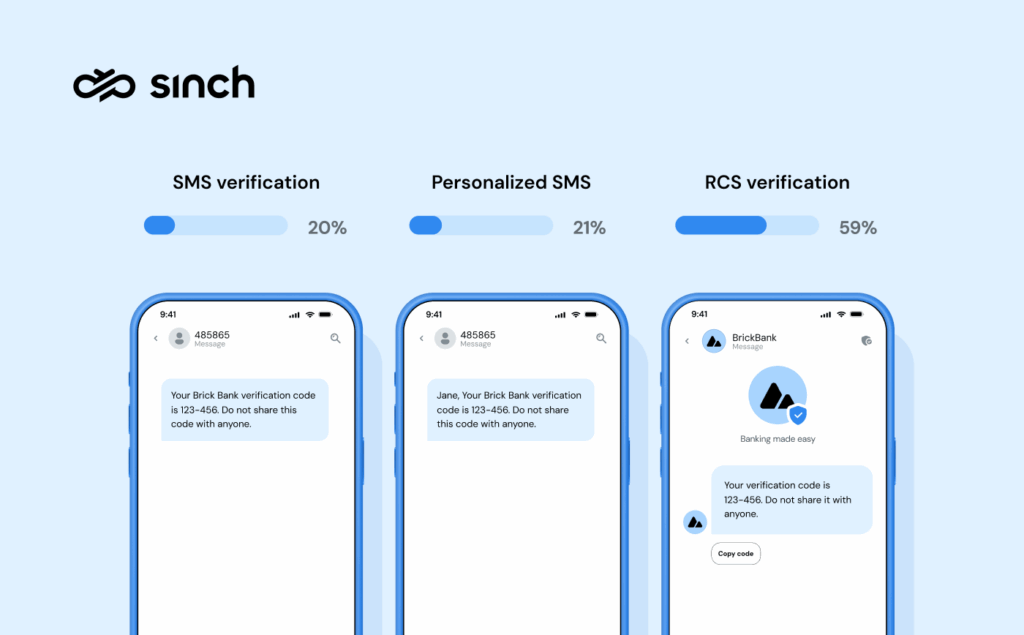
RCS messages clearly stand out – and 79% of consumers say visual cues in RCS messages like official logos or checkmarks make them at least somewhat more likely to trust a message’s legitimacy.
This is essential when it comes to things like password resets, one-time passwords, and log-in alerts. With RCS, tech companies can send those messages all from branded profiles to reduce phishing risks.
Smarter support and automated assistance
AI adoption is high in the tech industry: 59% of tech leaders say they use it for data analysis. But far fewer apply it to customer-facing communication, missing out on automation opportunities.
RCS offers a secure, branded way to put AI to work for customers. Businesses can deploy chatbots for FAQs, offer escalation paths to live agents, and keep conversations in one thread, making it easy to respond and follow up without losing context.
A real-life example of RCS in technology: EasyPark Group
EasyPark Group, a leading European parking services platform, faced a familiar challenge: how to reduce support load while improving user satisfaction.
Using RCS, EasyPark sent branded, real-time parking session reminders directly to users just before their time expired. Their results were impressive:
- 97% delivery rate
- Millions of messages delivered
- A branded, secure experience delivered in-channel

“Once a customer downloads our app, they’re someone that we want to hang on to for their driving life. Forming that trust early, making them feel secure, and protecting their account information is super critical. And I think that’s where things like RCS can really help.”

EasyPark’s success shows how RCS can simplify everyday interactions while reinforcing trust.
Get your tech company started with RCS
Implementing RCS doesn’t require rebuilding your entire communication stack. Sinch makes it simple:
- Start with your use case. Whether you want to use messaging for marketing, onboarding, verification, or customer support, identify where richer interactions in your customer journey would make the biggest impact.
- Leverage an API or turnkey application. Solutions like Conversation API or Sinch Engage can help you deliver RCS messages to supported devices, while using SMS to ensure no customer is left out.
- Expand at your own pace. Add interactive features like carousels or quick replies, or integrate with other channels like WhatsApp as your strategy matures.
With Sinch, your communication stack can grow alongside your platform, without you having to compromise on experience.
Is it time to rethink your customer communications?
The technology industry is built on innovation. But innovation doesn’t stop at your product; it extends to how you communicate with your customers.
RCS helps turn everyday touchpoints into branded, verified messages that strengthen trust and simplify engagement. And with Sinch, getting started is easier than ever.
Want to learn more about how innovative companies are using RCS across industries? Explore the full findings in our State of RCS for customer communications report.
Or, if you’re ready to get started, our team can help you identify the right tech use cases, build a phased rollout, and measure results – so every message drives real impact. Get in touch to start your RCS journey.

Author: