Insights
What football managers’ cliché phrases reveal about high-stakes brand communications
What does a football manager’s post-match press conference have to do with your next big campaign? More than you’d think.
The world’s biggest football event is underway, and for the 48 national team managers competing, every pre- and post-match microphone moment is a high-stakes communication test, watched by billions, and now scored by a new AI tracker created by Sinch to document every cliché phrase that slips out in a press conference.
The overused phrases that define these communications reveal a pattern that isn’t unique to sport, and a challenge that every brand scaling intelligent communications will recognize.
The more pressure, the more clichés
The AI-powered tracker, built specifically for the 2026 tournament, is documenting the tendency of football managers to reach for the same familiar phrases under pressure.
The tool is built on a 205-phrase dictionary of football clichés spanning six languages: English, Spanish, Portuguese, French, German and Arabic. Each phrase appears repeatedly in major tournament press conferences, regardless of the match context, and would be immediately recognized by fans as a well-worn fallback — phrases like “we take it one game at a time,” “the boys gave 110%” and “there are no easy games at this level”.
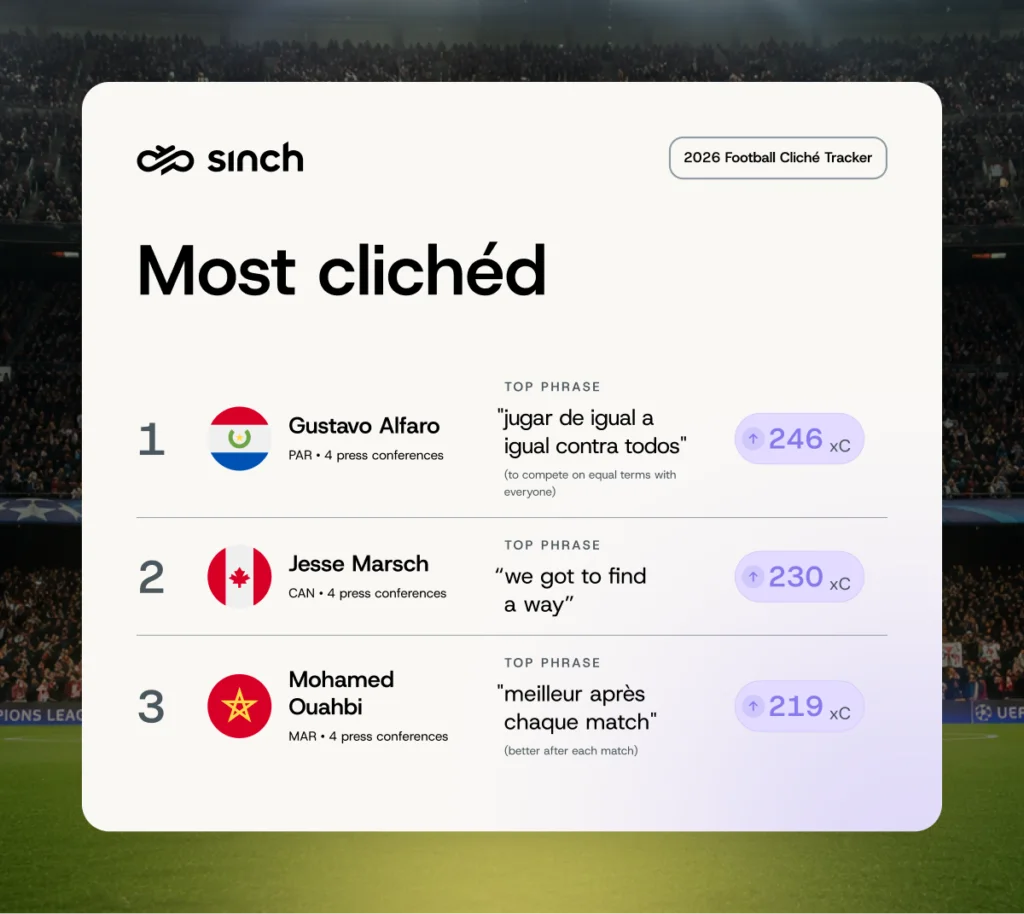
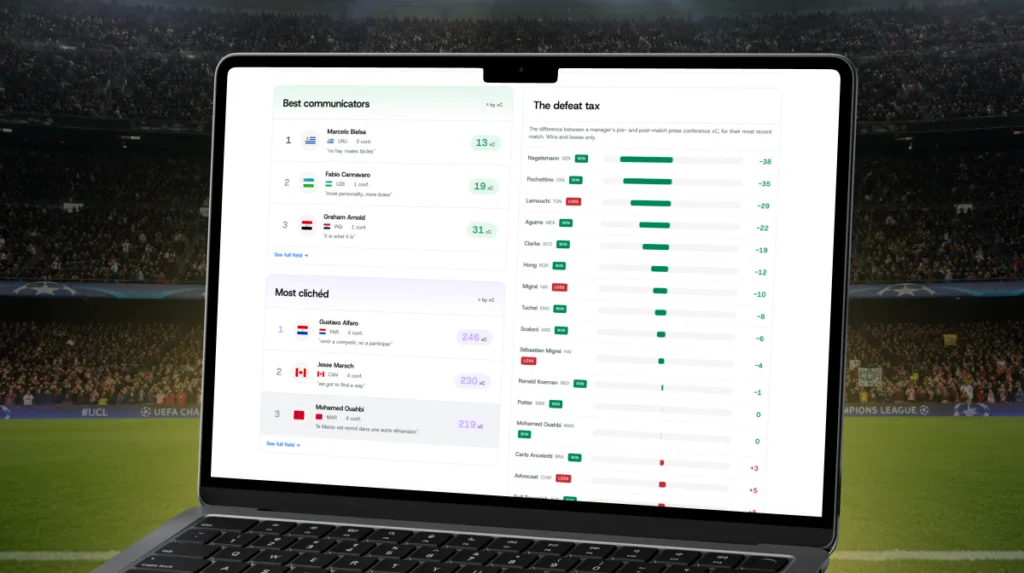
The tracker, called the xC Tracker, borrowing the naming logic of football’s xG (expected goals) metric, monitors every pre- and post-match press conference across the tournament and ranks all 48 managers on how often they default to stock phrases rather than offering something insightful and specific.
The cost of empty words
Every organization that communicates at scale faces a version of the same challenge. When the volume is high and the pressure is on, the notification that could have been relevant and timely can quickly become a templated, delayed message. The campaign that could have felt personal can arrive at the wrong moment and read like noise rather than valuable information. The customer support response that could have made a customer’s day can arrive too late, be too generic, and fail to address the issue entirely.
During high-stakes moments — a Black Friday shopping rush, a platform service outage, or a flight cancellation wave — the cost of saying the wrong thing at the wrong moment is even higher. Messages compete not just against other brand messages but also against genuine stakes, and sometimes genuine frustration. These moments are when customers’ tolerance for anything that feels scripted is at its lowest.
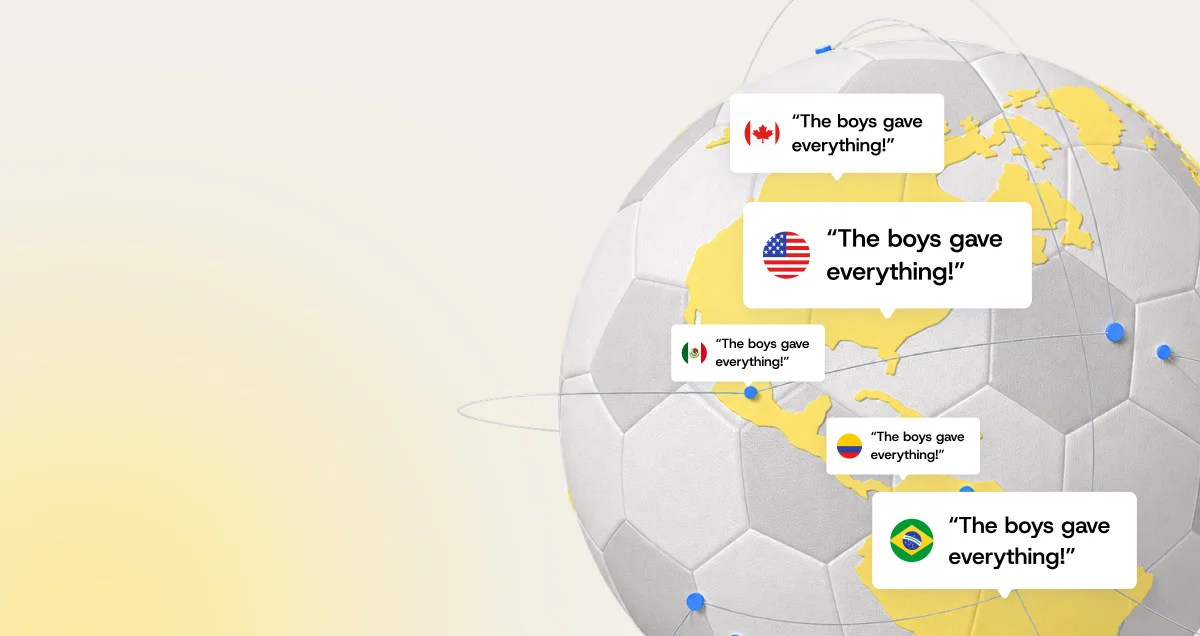
When a football manager tells reporters “we gave everything” after a defeat, the message lands the same way whether it was a tight loss to the tournament favorites or a humiliating collapse against the lowest-ranked team in the competition.
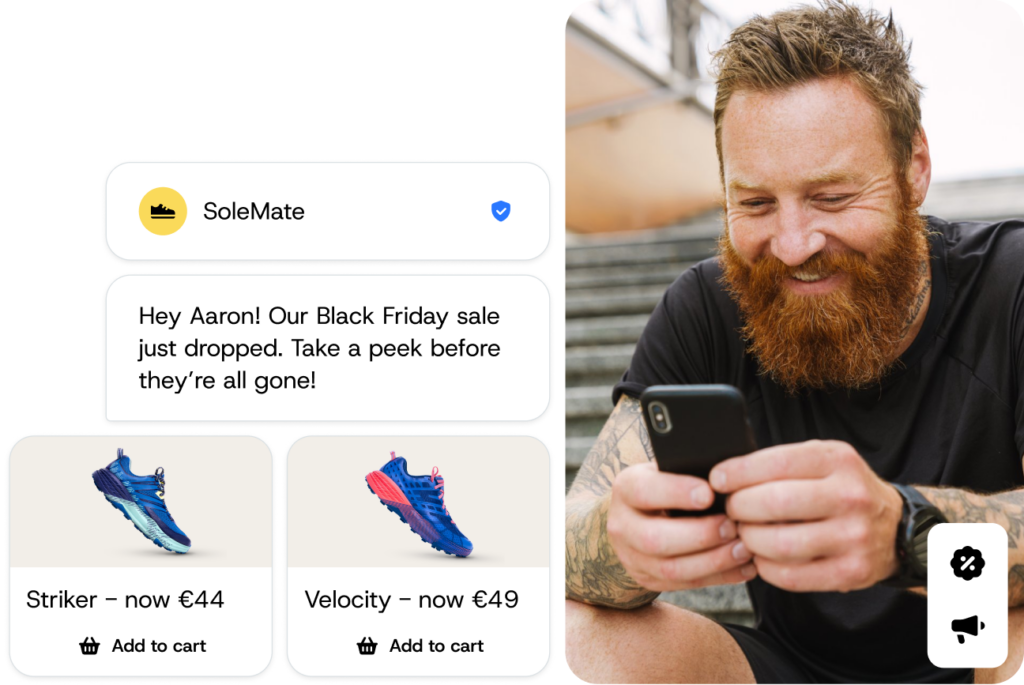
When a retailer sends a generic ‘your order has been cancelled’ notification to customers whose holiday purchases can’t be fulfilled due to a stock shortage — instead of a proactive text that lets them reply and pick an alternative — the relationship the brand took months or years to build can unravel in a single send.
One bad experience is all it takes: research shows 75% of consumers would switch brands because of it.
The universal challenge of peak-time communication
What makes pre- and post-match communication interesting as a case study is its constraints. A football manager has minutes, sometimes less, to say something valuable at the microphone after the final whistle.
Brands operate under similar constraints during high-stakes moments. When sending updates or campaigns to millions of customers during a major event, they have a narrow window in which they can make that message matter — and do so at scale. If they miss it, the opportunity has passed. If they rush it with something generic, customers notice. Research shows that more than 70% of consumers expect brands to personalize their communications and a third say they’re frustrated when those messages are irrelevant.
of consumers expect brands to personalize their communications (Sinch, 2025)
of consumers say they’re frustrated when messages are irrelevant (Sinch,2025)
The most meaningful communications, in football and in business, have two things in common: specificity and reliability.
A manager who offers a precise tactical observation after a match is adding something that couldn’t have been said about any other match. The best communicators do it consistently, regardless of the circumstances, and players and fans take confidence from it.
During peak moments like Black Friday, if a retailer sends a ‘biggest deals of the year’ email to someone who bought full price the day before, or a ‘last chance’ text that arrives after the deal has already ended, the messages fail on both counts. A brand message informed by today’s context, rather than scheduled six weeks ago, requires infrastructure built to handle that volume, complexity, and scale — and a layer of AI to make it relevant to every recipient. This is how it earns its place in the moment it arrives.
There are no easy messages at this level
The xC Tracker updates in real time from the group stage through to the final, tracking how each manager’s score evolves after wins and losses, and whether communication patterns shift as the tournament pressure intensifies. At the end of the competition, it will name football’s first-ever Press Conference Ballon d’Or: the award for the most authentic communicator of the tournament.
Brands building intelligent customer communications at scale face the same challenge as the football managers we’re tracking: delivering something meaningful to an audience of millions, at the right moment, consistently. With the right foundation, relevance and reliability at scale are built in, not custom-engineered. That’s the foundation we’ve been building for 25 years. And when the foundation holds, your deployments stay live and you can focus on building the experiences your customers want.

Author: