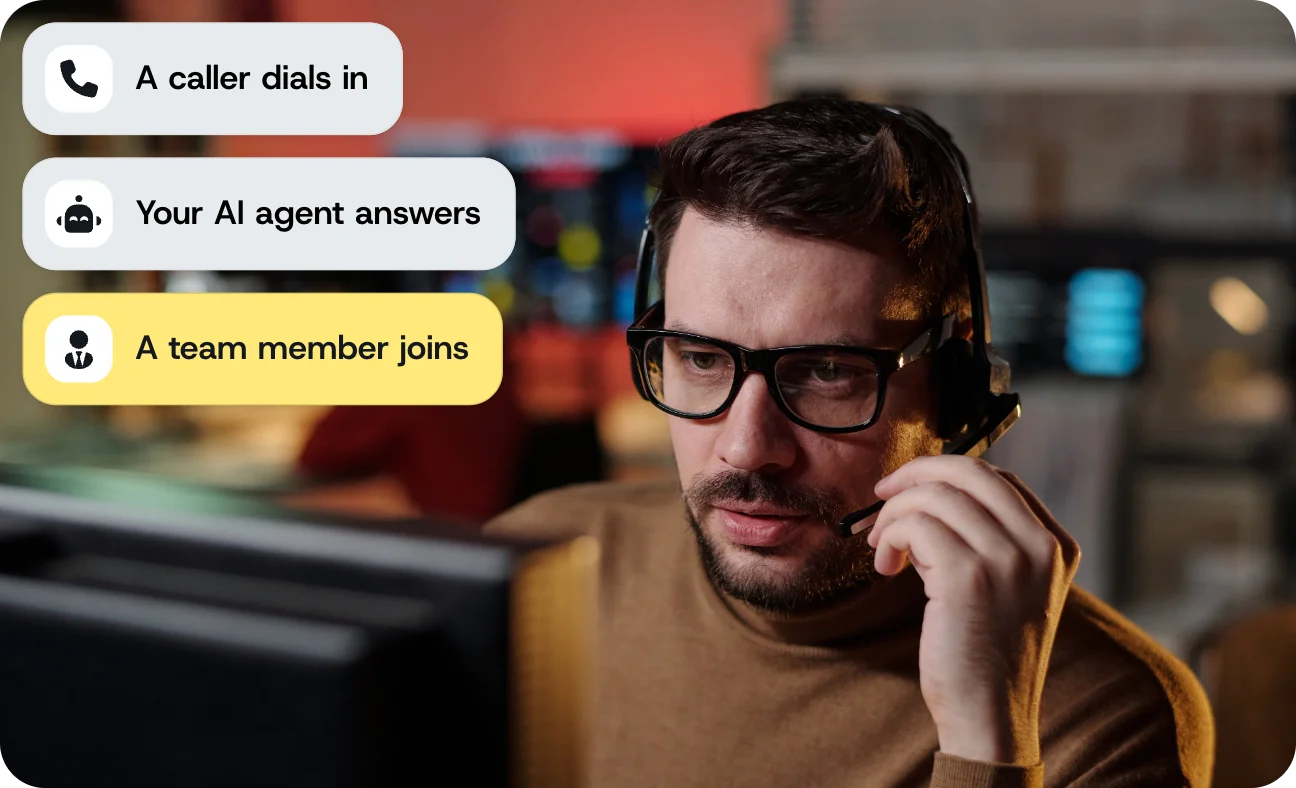
When something matters, customers still pick up the phone. Give the AI agent you already have a phone number and let it answer. A person can join the same call whenever the AI reaches its limit.
AI AGENTS ON THE PHONE
When something matters, customers still pick up the phone. Give the AI agent you already have a phone number and let it answer. A person can join the same call whenever the AI reaches its limit.
Bring your own AI agent or voice AI platform
Connect it over text, live audio, or SIP
Record, transcribe, and detect voicemail on every call
Voice API v2 is in Public Preview.
AI agent use cases
Most teams start with one job the phone line does badly today, such as long queues, rigid menus, or missed after-hours calls. These are the jobs an AI agent takes on first.
Choosing a connection
The difference comes down to who listens and speaks on the call, and who runs the infrastructure. All three run on Voice API v2 with the same account and phone numbers.
Call controls
A good AI call needs more than the conversation itself. Handoff, recording, transcription, and voicemail detection all come with Voice API v2, so you don’t piece together a separate telephony system.
Developer tools
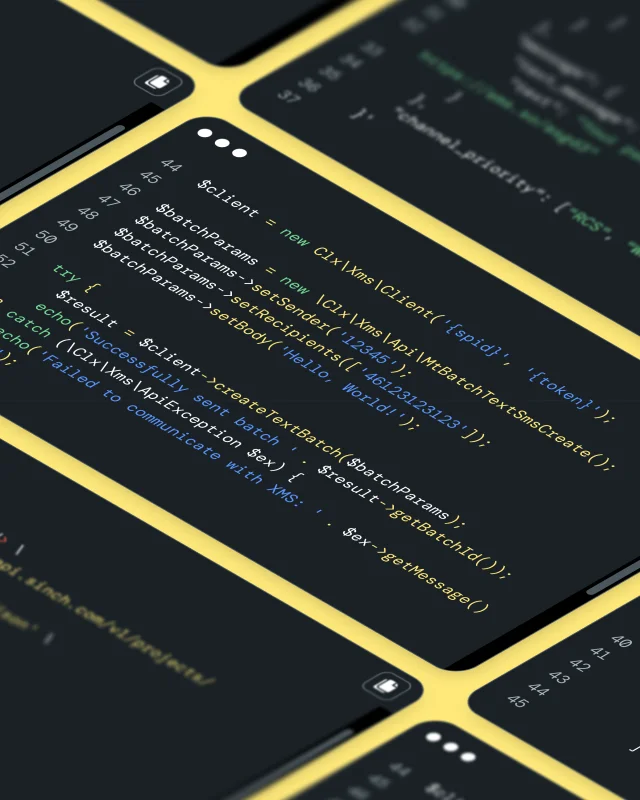
Your developers, or the AI coding assistant they work with, build the call flow. It can run on your own server, as a function, or over SIP to your agent platform. Build guides with working code cover each path.
Two-way WebSocket connections: Text for Voice Relay, raw audio for Voice Streams
SIP calls to your AI agent platform’s endpoint, inbound or outbound, set up in SVAML
Call control through SVAML commands, with events delivered as CloudEvents 1.0 webhooks
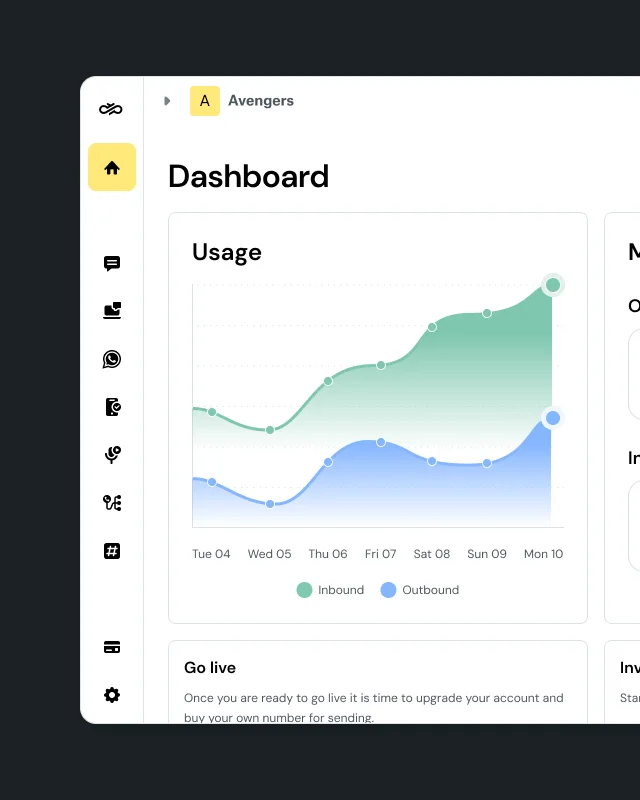
Sinch Functions in Node.js or C#, deployed from the dashboard or the Sinch CLI
A documentation MCP server, Sinch Skills, and the Sinch CLI for AI coding assistants
Voice and reliability
Your AI agent’s answers are only as good as how they sound on the line. Here’s what Voice API v2 brings to the call.
Connect AI agents FAQ
These are the questions teams ask before putting an AI agent on the phone.
No. You bring the AI agent, and you’re responsible for it and how it behaves. Voice API v2 connects it to the phone call.
Voice API v2, including Voice Relay, Voice Streams, SIP, and Phone (PSTN) as channels, has been in Public Preview since September 1, 2026.
Choose Voice Relay if your AI agent works in text and you want the listening and speaking handled for you. Choose Voice Streams if your AI agent platform already works with live audio. Choose SIP if your AI agent platform already takes phone calls over SIP. Choose Sinch Functions if you don’t want to host a server, and connect your agent inside it with Voice Relay or Voice Streams.
Yes. Your developer uses Voice API v2 to dial the platform’s SIP endpoint and bridge it to the caller, for inbound and outbound calls. The platform runs the conversation.
No. Bring the AI agents you already use. Voice API v2 provides the phone side: Numbers, connecting calls, handoff to a person, recording, and voicemail detection.
No, if you use Sinch Functions. Deploy the Voice Relay template, or describe the call to Assistant in the dashboard and it builds and deploys the flow. Assistant can make mistakes, so have someone technical review what it generates before you deploy.
For Voice Relay and Voice Streams, yes. You host the server that holds the live connection. With SIP, you host the SIP infrastructure or use a third party. With Sinch Functions, there’s no server to host, because Sinch Functions runs your call logic.
Yes. Every new dashboard account comes with credits and a phone number set aside for testing.