Insights
Face-to-face trust in a screen-to-screen era
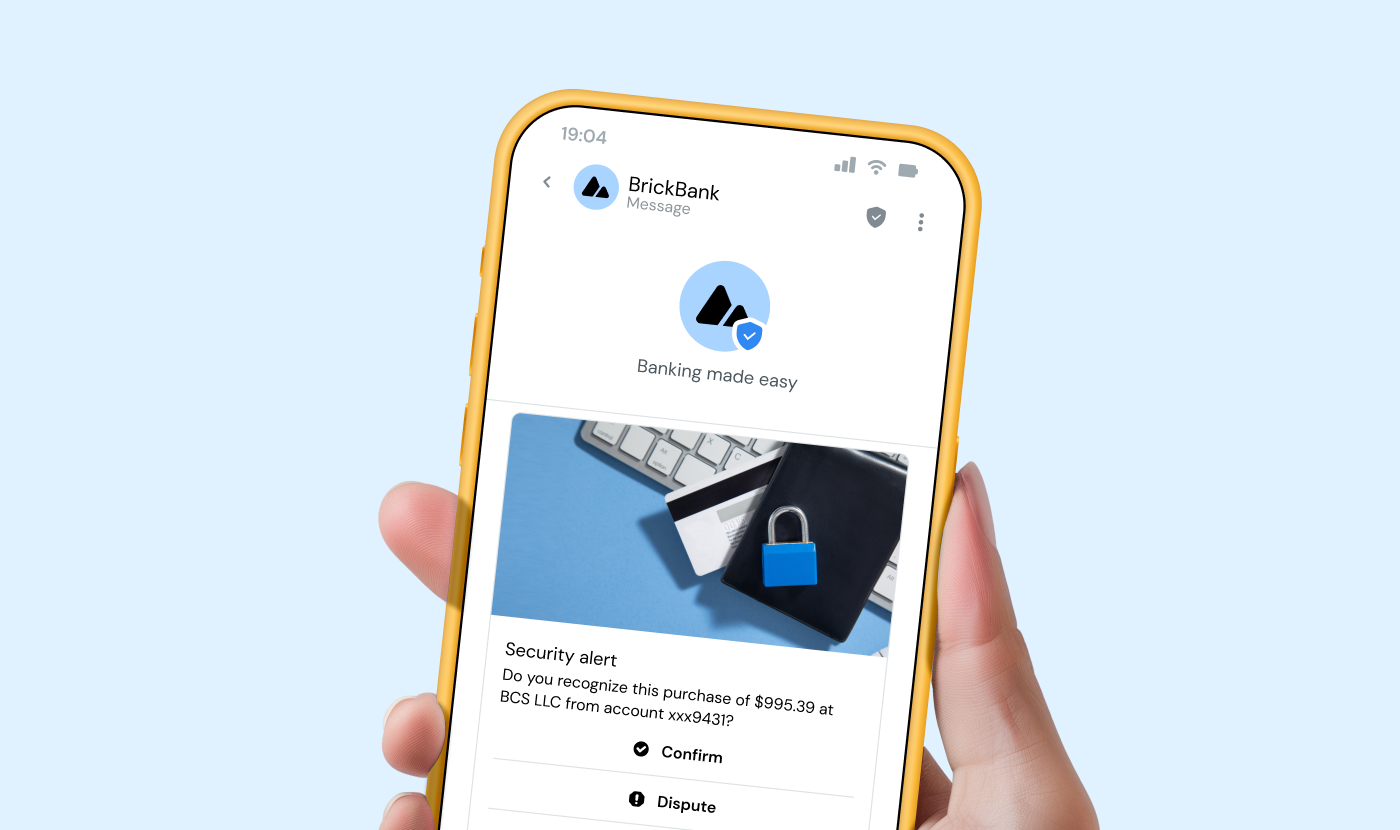
Fifty years ago, banking wasn’t convenient, but it was highly trustworthy; it would take a vast conspiracy to spoof an entire banking branch.
Modern banks’ owned apps could be classed as digital branches. They’re well used as transaction portals but don’t come near to offering the kind of brand experiences and messages customers once expected. Many customers switch off in-app messaging, either literally or by ignoring them.
So if one kind of messaging is ignored and the others are justifiably viewed with suspicion, what’s a bank to do? Banking is now a messaging business. Every customer conversation, from marketing and sales to service and support, depends on trust. That’s why closing the trust gap is a strategic imperative. Those in the financial sector who create a single, trustworthy user journey across multiple platforms will find a powerful, uncontested competitive advantage, protecting their operations and winning the battle for long-term customer loyalty.
The modern trust crisis in banking
It’s 1969 and you’re taking your paycheck into your bank’s local branch. It’s never crossed your mind to ask, “Is this really my bank?”
While modern banking customers don’t have to make a trip to the branch, the price of digital convenience is the loss of that in-person verification.
With banking – and other financial activities – now exclusively conducted online, organisations face a modern trust crisis, one that needs solving to secure customer loyalty.
Banking is a communications business – engagement and trust are essential
You may think you’re in the financial sector, but banking is now a messaging business, from payment confirmations and customer support, to collections and marketing. Where the branch – and even letter-headed post – had customer confidence built in, the modern bank has to create it across its messaging ecosystem.
And that creates a challenge. According to a recent Sinch report, the channels customers engage with most – email, SMS and WhatsApp – are also the most vulnerable to fraud. Meanwhile, the most secure channels struggle to attract the same level of engagement.
Security is, of course, paramount for banking messages. But there’s little point in any message that few customers see.
In Asia Pacific (APAC), the most engaging channels can also create the greatest fraud exposure
| Channel | Customer Engagement | Fraud Exposure |
|---|---|---|
| Banking App Inbox | Medium | Low |
| SMS | High | High |
| High | High | |
| Very High | Very High | |
| Phone Calls | Medium | Very High |
| Push Notifications | Medium | Medium |
Trust and security are two different things. And you need both.
Securing messaging channels isn’t enough in itself. Messages must also look legitimate too. 53% of consumers have ignored a legitimate message from a brand because it looked suspicious.
In the last year, have you received a message from a business that seemed suspicious even though it was legitimate?
And that’s perhaps understandable. One survey found that 53% of APAC consumers experienced fraud in 2025, with phishing cited as the most common entry point (61%). 77% of AI voice cloning attacks successfully steal money.
Just getting customers to trust your messaging on these platforms more will open them to more risk of fraud. Keeping people safe is a core part of trust – 73% of customers who say their bank keeps their personal information and account secure also trust their bank.
Ultimately, building and maintaining customer confidence requires a two-prong approach – your messaging needs to be secure and feel secure.
That’s what we’re calling the trust gap – closing it is the key to protecting customer relationships, reducing risk and driving long-term growth.
The business impact of the trust gap
When society trusts financial systems, customer anxiety and market panic disappear. That macro dynamic can be seen at the customer level too – every message, for better or worse, impacts customer trust and therefore behaviour. That has a flow on effect to revenue, operational costs, retention and more.
Customer retention depends on multichannel comms
While security is essential to retaining customers, limiting your messaging to just your banking app can make it more difficult to build loyalty, promote new services, and maintain strong customer relationships.
Most consumers say banks should have seamless communications and interactions across all channels, but less than half feel their bank is achieving this. At the same time, 76% of customers are happy to switch to a bank that better suits their needs – and those delivering seamless experiences across channels report 51% better customer retention.
In short, fail to meet your customers where they are, and it won’t be long until a competitor will.
Phishy messaging limits revenue growth and customer expansion
Messaging outside of the banking app isn’t without issue. Send unverifiable marketing messages and many consumers will categorise them as ‘phishy’, then reflexively ignore the message or even block the sender. This limits you to in-app conversations, where users are looking to complete a transaction and not in the mindset to consider broader financial growth, new products, or fun promotions. Some customers may also have turned off all but essential notifications.
Together this creates engagement decay, significantly reducing the ROI of marketing sends and limiting upsell and cross-sell opportunities. And that’s a problem. Banks that run digital cross-selling campaigns report up to 7x higher product conversion rates, 1.5x higher product uptake, and 2x higher income returns year-on-year per customer.
Trusted messaging decreases servicing costs
Even a clunky authentication message or poorly timed fraud alert can trigger suspicion in your users. They’ll then dial into your call centre for confirmation, moving from low-cost self-serve and automated channels to high-cost ones.
What should have been a low-cost digital interaction then needs human involvement. That increases servicing costs, delays the resolution, adds friction to the customer journey, and increases operational pressure.
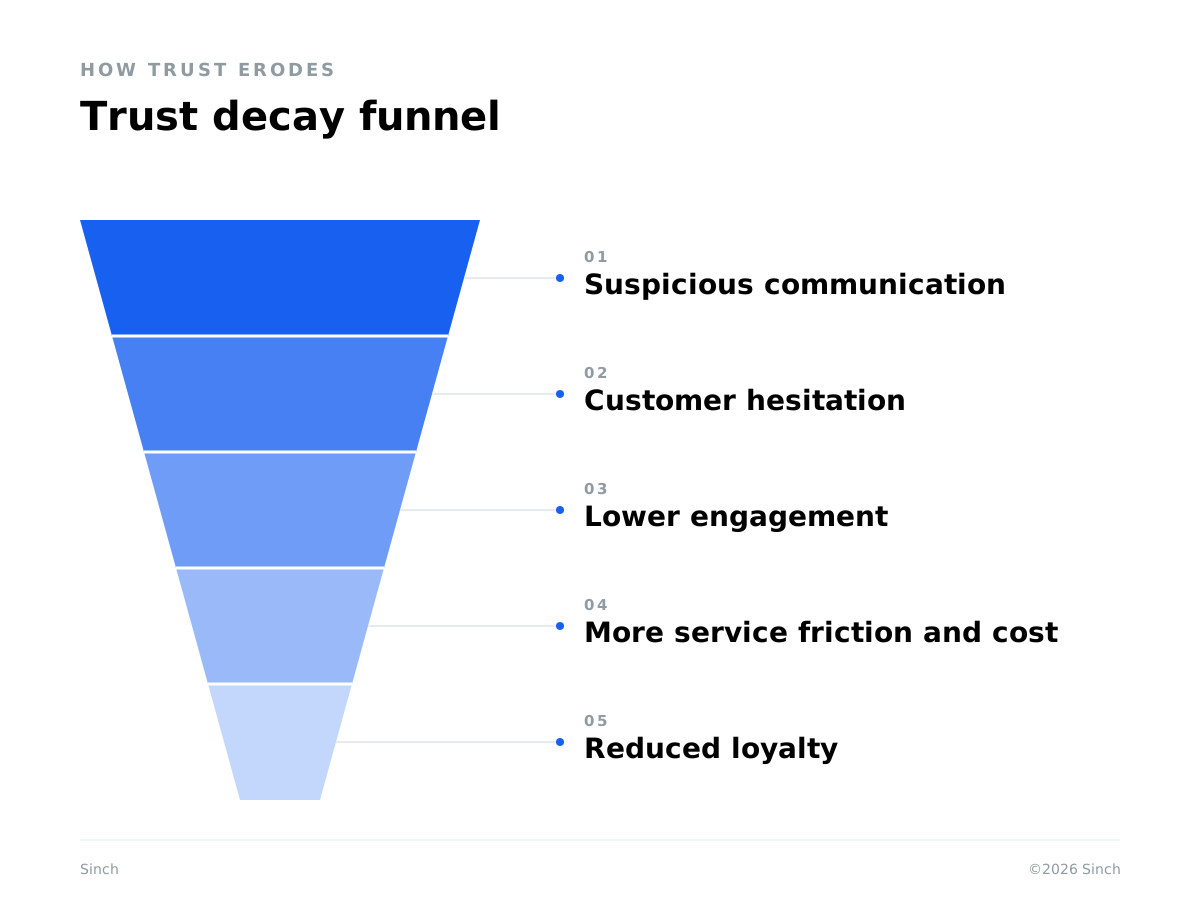
- Suspicious communication
- Customer hesitation
- Lower engagement
- More service friction and cost
- Reduced loyalty
Trust and engagement across your comms ecosystem
Banks face a seemingly lose-lose choice: limit messaging to only highly secure apps and sacrifice engagement, or message outside the apps and risk eroding trust.
The solution might be to stop thinking about the choice as a binary. When both kinds of messaging work together, organisations can extend bank-grade trust outside of the app. Instead of fragmented interactions across disconnected channels, customers experience one recognisable journey, reinforcing trust and boosting engagement at the same time.
Building a true multichannel customer experience
For customers, multichannel messaging has become the expected default – when interacting with friends or even favorite retailers, conversations continue across touchpoints, creating lower-friction and more reassuring journeys. It’s why customers say that having to repeat themselves when switching channels is frustrating (42%), wastes their time (24%), and makes them lose trust in the business (15%).
“Banks and fintech organisations often see messaging channels as separate from the app experience – they’re not. They’re all part of the same customer experience, so your messaging channels reinforce and complement how you’re using your app to connect with customers.”

Connecting the conversation dots
Sinch’s Conversation API brings channels like SMS, WhatsApp and social messaging into a single platform, while the broader Sinch platform also supports voice and email. Meanwhile, integrations mean conversation data can be surfaced inside existing banking systems. Support agents using Salesforce or Zendesk can see a customer’s recent SMS fraud alert, that they clicked a verification link, or abandoned a chatbot conversation before calling support.
Marketing or customer updates also play a part in building this experience. When customers can see related messages, notifications or actions reflected inside their banking app, external messages become easier to recognise and trust.
Together, this creates communications that feel like part of a single relationship rather than a series of disconnected transactions.
Bringing bank-grade trust to non-bank channels
Modern messaging tech add stronger trust signals to channels that are more associated with phishing and impersonation. Verified identities, branded sender experiences and stronger authentication help protect customer trust – and engagement along with it.
“What we’re saying is to meet customers where they are… how they talk to friends and family. If we can tap into that, we can give them a better experience. …If we’re not reaching customers on these channels, we’re probably not addressing that part of the market.”
Watch: Omnichannel engagement in financial services with Meta
RCS (Rich Communication Services)
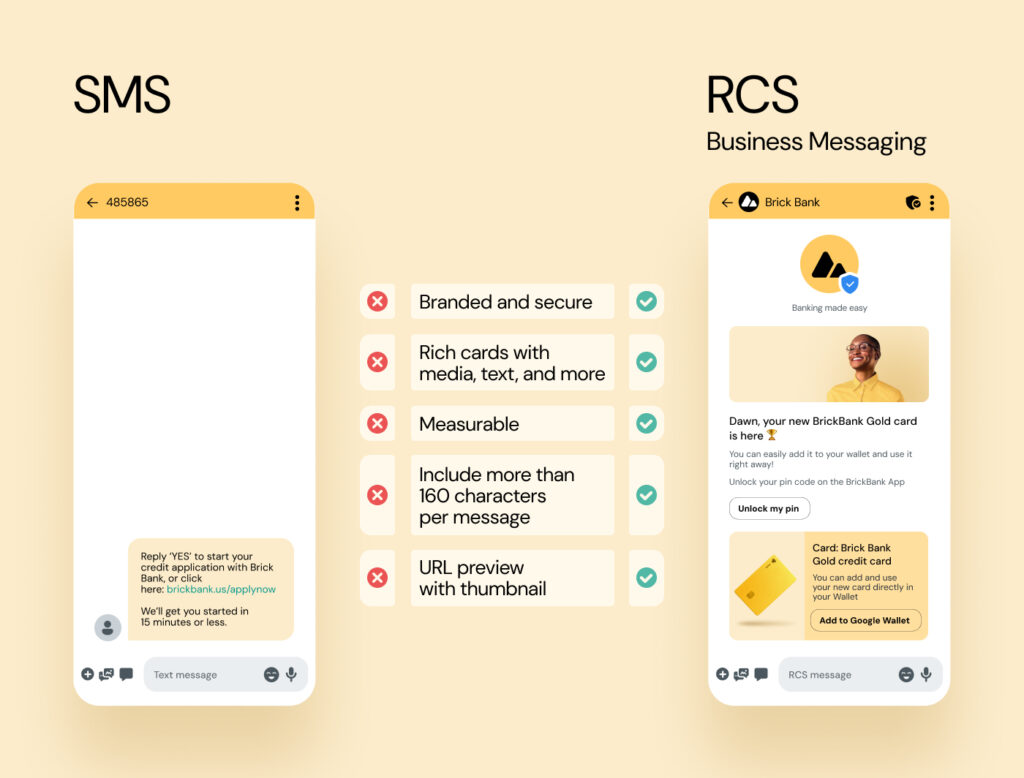
While RCS’ interactivity brings huge potential for more engaging customer journeys, it’s arguably the security upgrades that will have the most impact. Official logos, verified sender checkmarks and branded profiles help customers quickly recognise legitimate communications and make impersonation far more difficult for fraudsters. More than half (59%) of consumers find RCS messages with trust marks significantly more trustworthy for OTPs than standard SMS, with 55% of financial institutions seeing RCS as a potential game changer.
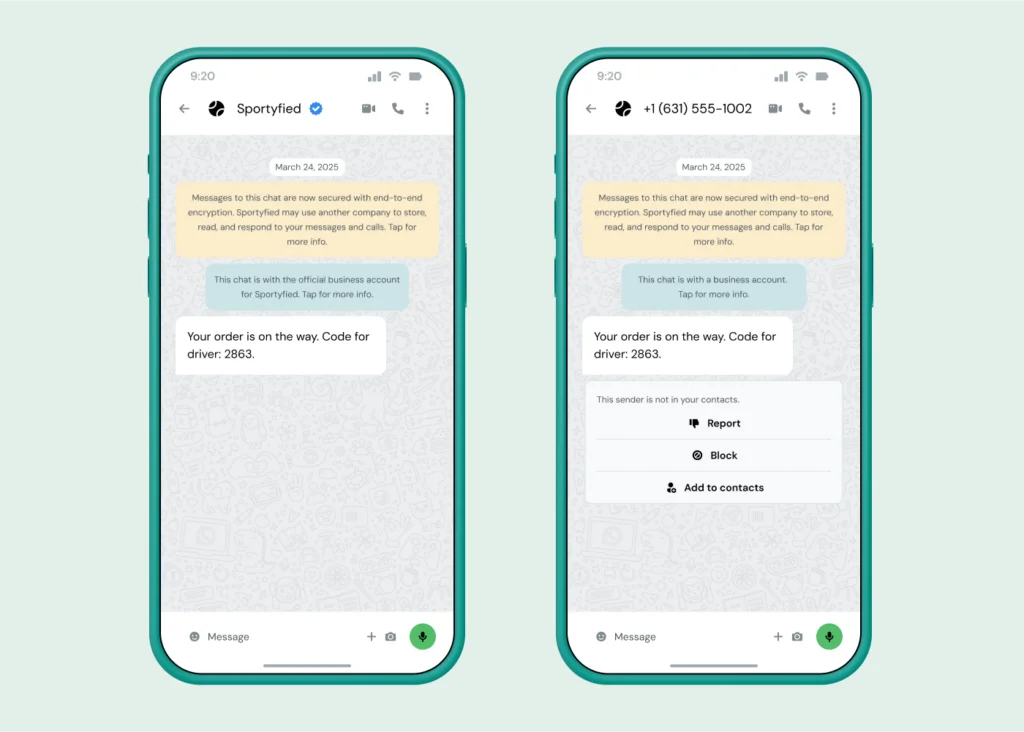
WhatsApp Business API
With verified business profiles in WhatsApp messaging, you get end-to-end encryption and richer experiences. Brand names, logos, and a blue verification tick add instant recognition and comfort for users.
Interactive features including images, documents, buttons, carousels and conversational workflows so customers can track requests, complete verification steps, receive support or take action from inside the conversation.
Email authentication and branded inbox experiences
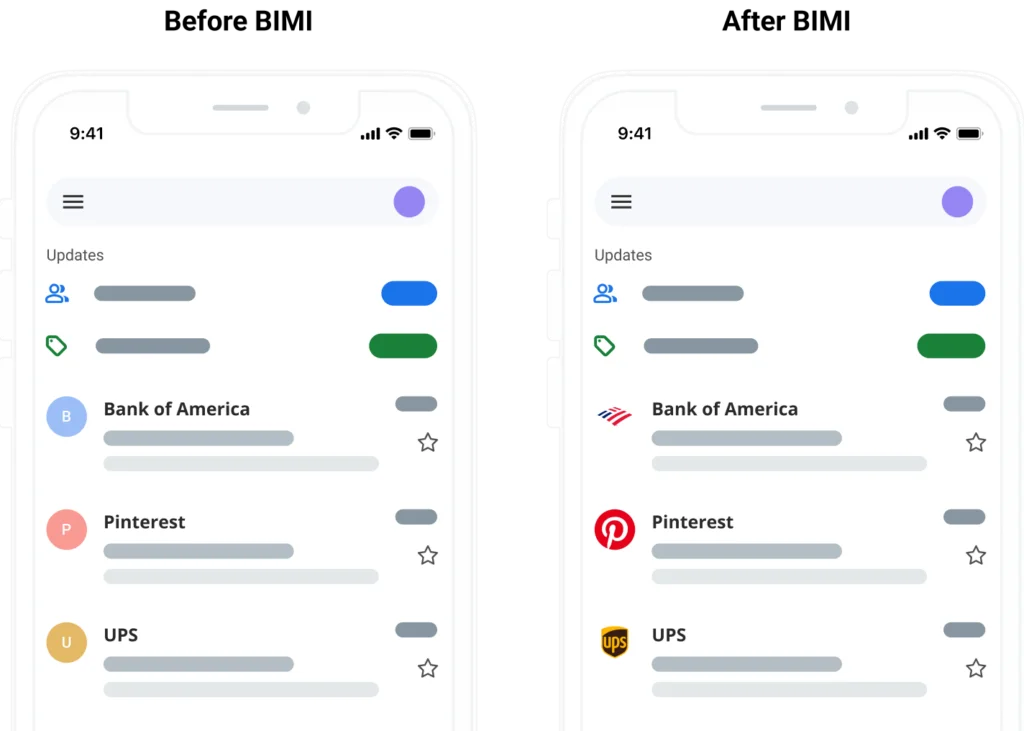
Email security basics like SPF, DKIM, and DMARC can flag phishing to your users, helping them feel more confident when interacting with legitimate emails. BIMI (Brand Indicators for Message Identification) takes this one step further. It displays your brand logo alongside authenticated emails – a fast way to reassure customers in their inbox.
Reducing friction, building trust
Counterintuitively, security measures that feel difficult, disruptive, or unfamiliar can breed suspicion. By streamlining experiences without impacting security, organisations can reinforce trust and engagement simultaneously.
Flash Calls remove verification labour
Sinch Flash Calls replace an OTP, eliminating any steps at the user’s end. It verifies a user’s identity by placing a brief automated call to the registered phone number. The customer doesn’t even need to answer. There is no need to cut and paste a verification code either. It’s a fast, seamless process that also maintains strong authentication standards. Sinch Flash Calls can also slash authentication costs by up to 50% compared to standard SMS one-time passwords.
“Instead of the one-time code being in the payload of a message or voice call, it’s actually in the calling party of that missed call.”

AI-powered voice calls
AI voice technologies are now so advanced that they’re a viable option for real-time support. Customers can easily resolve issues, verify information or complete routine tasks without navigating menus or waiting in call centre queues. Housed within secure banking apps these voice calls wouldn’t have the risk of impersonation that comes with other voice channels.
About Sinch: The communications platform for financial trust
Sinch’s communications platform closes the trust gap for financial institutions by delivering one secure, recognisable experience across every channel.
Trusted by 200,000+ businesses globally – including Visa, Paypal, Nationwide and Allianz – we help enterprise banks and fintechs combine high-engagement external channels (SMS, WhatsApp, Email, RCS) with bank-grade security.
Our AI-powered Customer Communications Cloud helps financial institutions deliver trusted communications across every channel. Verified identities and friction-reducing tools for authentication, including Flash Calls, help ensure every message is both secure and engaging.

Author: