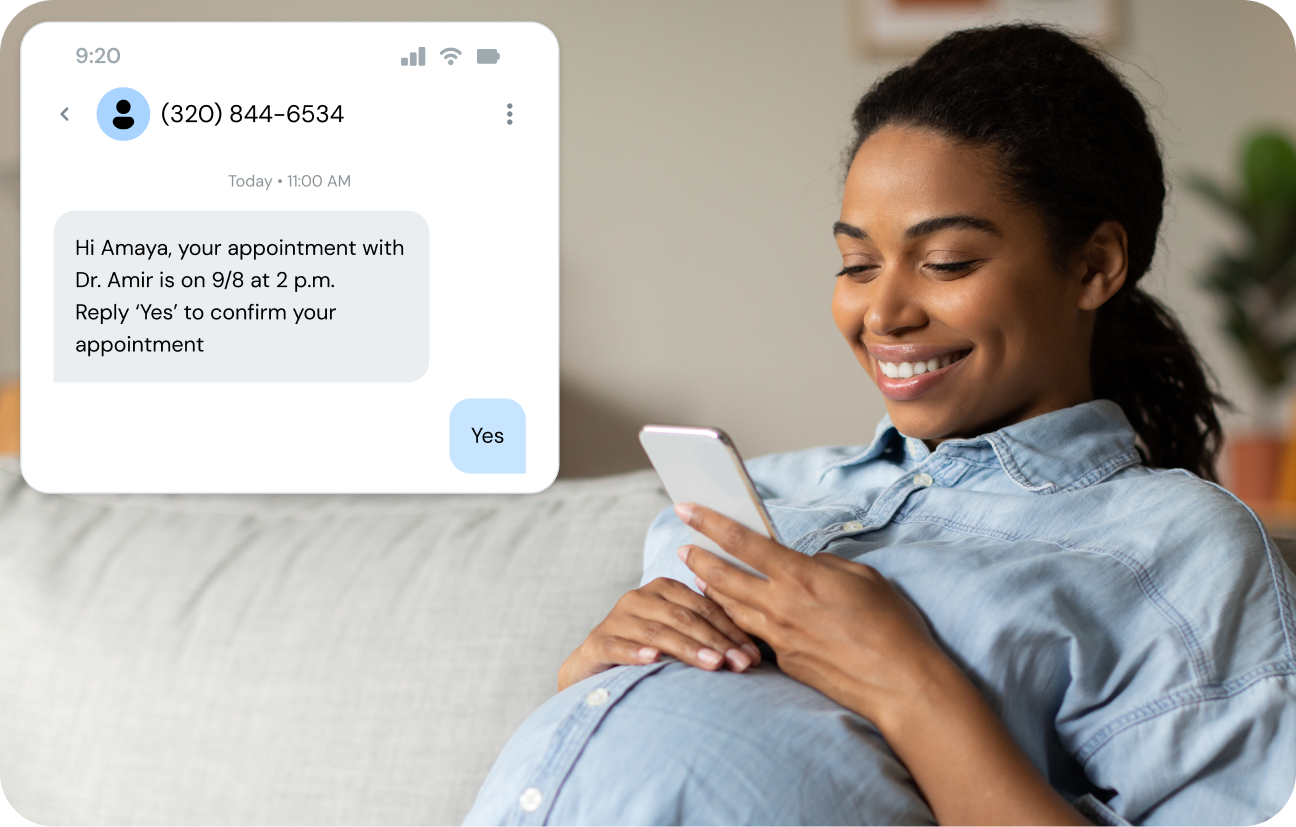
Sinch’s SMS API supports two-way messaging, so your applications can send messages and handle customer replies (Mobile Originated messages) via webhooks. Trigger workflows and reply at scale—without changing your existing tools.
SEND & RESPOND
Sinch’s SMS API supports two-way messaging, so your applications can send messages and handle customer replies (Mobile Originated messages) via webhooks. Trigger workflows and reply at scale—without changing your existing tools.
WHAT SETS US APART
As part of the Sinch SMS API, our inbound service comes through the unified Sinch Conversation API, so you can handle customer replies and run automated conversations inside your current systems. It’s ideal for teams running support and marketing conversations over SMS.
EASIER GROWTH
Manage customer questions, feedback, and opt-outs through a single webhook URL. Message replies are checked for keywords like STOP or HELP, then trigger actions such as auto-replies or new support tickets.
Keyword parsing built-in
Trigger any business logic
Real-time JSON payloads
Simple setup for a 2-way SMS API
BETTER CUSTOMER EXPERIENCE
Customers reply to your messages just as easily as they send them. Responses are routed to the right system, so agents see the full context and respond without switching tools. It supports all your two-way messaging needs.
Single conversational view
Auto-routing to CRM or desk
Higher customer satisfaction
DISCOVER ACTIONABLE INSIGHTS
Every reply, survey response, or opt-out is delivered over HTTPS for real-time analysis. Consent management tools help you meet TCPA and GDPR requirements without creating more work for your developers.
Secure HTTPS delivery
Consent management tools
Meets TCPA & GDPR
WHERE IT WORKS
WHAT’S INCLUDED
The SMS API lets your application send messages and handle customer replies via webhooks. With Sinch, you provision a short code or long number, configure a webhook URL, and receive HTTPS POST requests containing the message as JSON. Then, your app can reply using the Send SMS API.
How it works:
1. The customer sends an SMS to your Sinch number.
2. Sinch posts a JSON payload to your webhook over HTTPS.
3. Your app processes the data and replies through the Send SMS API.
A two-way SMS API supports both inbound and outbound messages. You capture replies via webhooks, trigger business logic (like auto-replies or ticket creation), and keep a unified conversation view.
Configure a webhook URL to receive real-time POST requests with inbound SMS as a JSON payload. Your application processes the data and can reply using the Send SMS API.
The API sends a POST request with a structured JSON payload that includes the sender number, message text, and timestamp.
Yes. A provisioned inbound short code or long number is required, along with a web server capable of receiving HTTP POST requests.
Testing inbound messaging requires a provisioned number to receive the SMS. You can easily get a test number within the free Sinch sandbox environment to build and validate your webhook and application logic before you ever need to purchase a dedicated number.
No. The API takes care of standard keywords like STOP and HELP. More advanced conversation logic or chatbots live in your application.
Note: This product does not include chatbot or NLU capabilities—message parsing and business logic need to be handled by your application.
You need a Sinch account, a provisioned inbound number (Short Code or Long Number), and a web server capable of receiving HTTP POST requests.
Inbound message pricing varies by region. Number rental and outbound messages are billed separately.
Developers, Product Managers, and Customer Experience leaders at enterprise or mid-sized companies focused on customer engagement and support.
Ready to learn more? Our experts can help you get started capturing replies, auto-managing STOP/HELP messages, and routing to your CRM or desk.