Insights
7 ways SIP trunking lowers voice costs
Traditional phone systems are bleeding your budget through fixed capacity charges, hardware maintenance, and per-minute fees you don’t need to pay. SIP trunking replaces that legacy infrastructure with internet-based voice services that scale instantly and bill based on actual usage. Here’s how seven specific capabilities cut your telecom costs without compromising call quality.
Your company phone bill keeps climbing, and your IT team keeps patching together systems that can’t handle remote workers or international calls without racking up per-minute charges.
The traditional primary rate interface (PRI) lines you’re using do the job connecting you to modern infrastructure, but they also lock you into a fixed capacity since you’re paying for 23 channels whether you use them or not. Sure, you could add more lines. But that means spending money on hardware upgrades, telecom visits, and weeks of lead time. Meanwhile, you’re being asked to cut costs without sacrificing call quality or reliability.
An impossible ask? Well, SIP trunks might be your solution!
SIP trunking replaces those physical lines with internet-based connections to your voice infrastructure. With them, you only pay for what you use, scale instantly, and eliminate hardware maintenance. How exactly?
Below, we’ve compiled seven specific ways SIP trunks reduce operational costs.
What is SIP trunking?
But first things first. In case you’re new to SIP trunking: SIP trunking connects your phone system to the public switched telephone network (PSTN) through the internet instead of physical phone lines.
It uses the Session Initiation Protocol (a VoIP technology) to route calls between your existing communication system (like your IP-based Private Branch Exchange, PBX) and the outside world.
Think of it as a virtual replacement for the copper wires or PRI lines you’re using now. Instead of physical connections or lines that need a gateway to convert voice signals into a digital packet, you get internet-based channels that carry voice, video, and messaging.
SIP trunks work with your existing PBX, contact center software, or interactive voice response (IVR) systems.
You keep your phone numbers and calling features, but the underlying infrastructure shifts from analog hardware to internet protocols. That shift is where the cost savings start.
1. Reduce hardware costs
Legacy phone systems need physical equipment at every location.
PRI lines require channel banks, T1 cards, and dedicated circuits. Each one costs between $300 to $800 per month, per location. Then you still have to consider installation fees, backup power supplies, and the space to house it all.
SIP trunks run over your existing internet connection. No proprietary hardware. No PRI gateways collecting dust in your server room.
You can connect SIP trunks directly to cloud-based PBX systems or IP-enabled on-premise equipment you already own. When you add a new office, you configure software instead of scheduling a technician visit.
A company with five locations spending $2,000 monthly on PRI infrastructure can cut its connectivity costs basically to zero with SIP trunks while keeping the same call capacity. Hardware failures that used to mean emergency service calls now just mean updating settings in a dashboard.
2. Lower operational costs
Unlike traditional phone lines, SIP trunking lets you route calls centrally and manage them without being limited by geography. For example, if one office is unavailable, calls can be automatically rerouted to another location or to mobile devices.
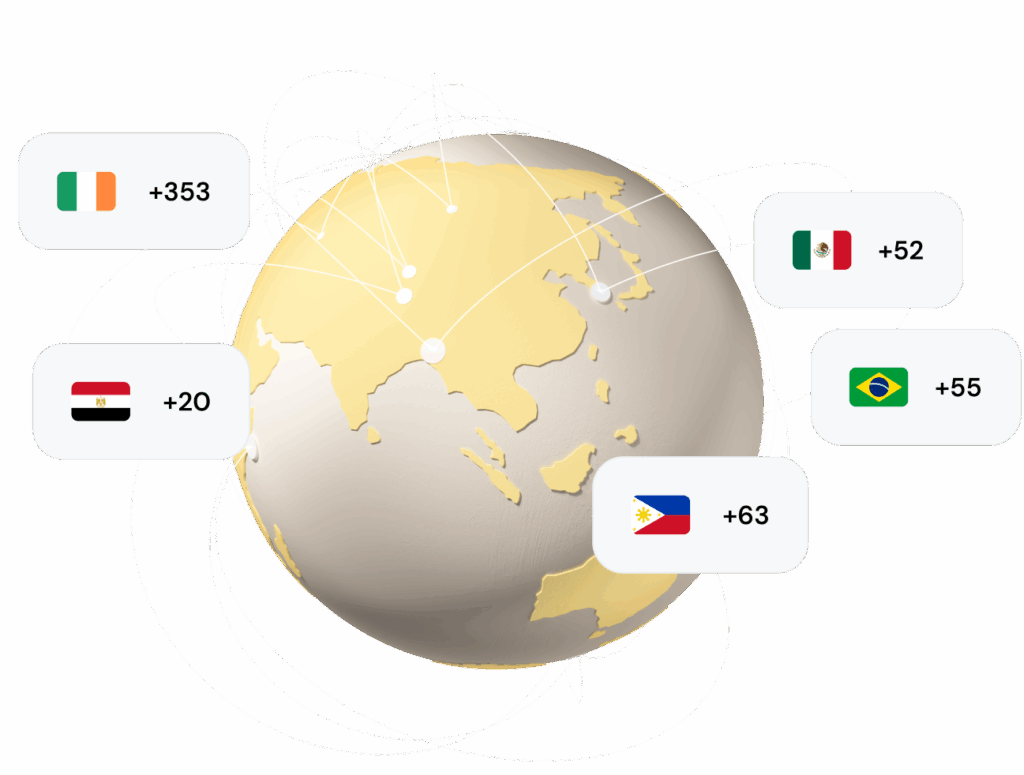
It also simplifies expansion. Since you can add lines or users on demand, adding a new office or remote worker is much easier – even in other regions or countries. Plus, it doesn’t require new hardware or waiting for physical infrastructure.
Together, this can significantly cut your operational spending.
3. Easily scale up and down depending on your needs
Traditional phone lines lock you into fixed capacity months in advance.
Let’s say you need 50 lines for increased call volume during the holidays. You end up ordering new PRI lines in September, paying installation fees, and waiting weeks for activation. When January hits, and you only use 20, you’re still paying for 50.
In contrast, elastic SIP trunk channels scale in real time. Depending on your provider, you can even manage this yourself through a central dashboard.
For example, a retail company could add 30 SIP trunk channels the week before Black Friday and remove them in December. No hardware orders, technician visits, or three-year contracts for increased capacity or flexibility.
SIP trunks also help contact centers with high call volumes and unpredictable demand. They can use elastic SIP trunking to match their phone capacity to actual call patterns instead of overpaying for worst-case scenarios. You add channels in minutes when you launch a new product and can reduce them just as fast when the campaign ends.
4. Only pay for what you use
PRI lines charge you for capacity whether you use it or not.
You’re leasing channels in fixed bundles. On slow days when only a fraction is active, you’re still paying for the full set. That unused capacity adds up fast.
Some cost-effective SIP trunking services use metered plans where you pay for active concurrent calls rather than reserved channels. If your business makes 500 calls on Monday and 2000 on Friday, your bill reflects actual usage. This pricing model works especially well for companies with inconsistent call patterns. A B2B sales team, for instance, might have heavy outbound days followed by quiet research days. They’re not subsidizing unused capacity.
The flexibility to match spending to actual call volume means you’re not overprovisioning for peak days and overpaying during normal operations. This is where SIP trunking cost savings become most visible for businesses with fluctuating demand.
But check with the provider first. Not everyone uses metered plans. Some SIP providers charge per minute or per channel in use.
5. Streamline communication channels onto one platform
Traditional setups mean juggling multiple vendors or systems for different communication needs:
- One for phone lines
- Another for video conferencing
- A third for team messaging
And each comes with separate billing, support contracts, and integration headaches.
SIP trunking bundles voice with other unified business communication tools on a single platform, including advanced features like call recording. You get high-quality voice calls, video meetings, messaging, and toll-free number functionality through one interface accessible on mobile devices. Your IT team manages one vendor relationship instead of coordinating between three or four.
Plus: If you make your internet services redundant, you then also benefit from shared redundancy.
Fewer vendors also means consolidated billing, streamlined support, and reduced administrative overhead. Integration costs drop when your communication tools work together from the start.
There’s no custom API work to connect your phone system to your chat platform and your team spends less time troubleshooting compatibility issues between disconnected systems.
6. Reduce the need for tech support
Physical phone systems break down and need on-site maintenance when there are failed cards, faulty wiring, or hardware that needs replacement every few years. Each incident means scheduling technicians, paying service fees, and dealing with downtime.
SIP trunks eliminate most of that hardware maintenance since your provider manages the infrastructure remotely. When issues come up, they’re often resolved through software updates or configuration changes.
Modern SIP platforms also include self-serve management tools. You can add or remove lines, adjust call routing, and monitor usage through a web dashboard without calling support.
Need to redirect calls to a different office? Update it yourself in minutes instead of submitting a ticket and waiting for a technician. That means fewer support contracts, lower maintenance costs, and faster resolution times when you do need to make changes. Small businesses especially benefit from this reduced complexity in their communication systems.
7. Use SIP REFER
Call transfers can create unnecessary costs if your infrastructure stays anchored to both call legs.
Let’s do the math. Say a customer calls your IVR, gets transferred to a queue, and then routed to an agent. Here, many IVRs charge based on total usage. Now, assume you’re paying 0.25 cents per minutes of usage of the IVR ,and a customer jumping between agents and IVR stays on the call for 10 minutes. Then your total charge adds up to $2.50.
In contrast, with SIP REFER in place, you only pay for the first minute before the call gets referred to the destination. Here, you only pay .25 cents.
Basically, SIP REFER hands the call off, so both parties connect directly after the transfer. Your platform steps out once the transfer completes. The ongoing conversation routes through the most efficient path without burning your bandwidth, licenses, or processing capacity.
It’s a great cost-saving perk, but not all SIP providers support REFER. When evaluating providers, look for platforms like Sinch that build this capability into their SIP trunking services.
Next steps to reduce your voice costs
Start by calculating what you’re currently spending on PRI lines, long-distance charges, and hardware maintenance.
Look at your call volume patterns:
- How often do you scale capacity up or down?
- How much are you paying for unused channels during slow periods?
- How many internal calls between offices are hitting your long-distance budget?
If those numbers add up to significant waste, SIP trunking cost savings can help you reclaim that budget.
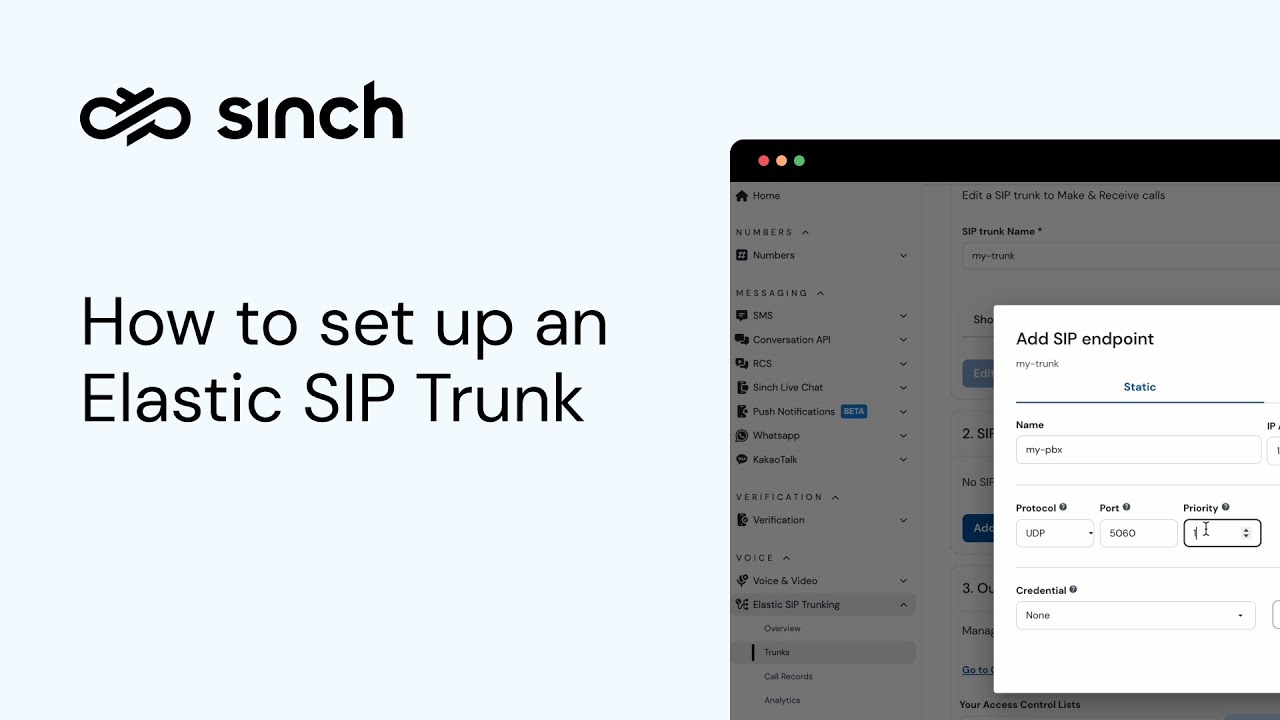
Setting up SIP trunks with Sinch takes minutes through the Sinch Build Dashboard with no setup fees for porting your existing numbers. You create a trunk, configure your domain, and add your endpoints – no hardware installation required.
Watch this walkthrough to see exactly how the process works and how quickly you can start routing calls through SIP infrastructure.
Ready to make your voice infrastructure more efficient and reduce costs without sacrificing quality? SIP trunking brings your voice costs in line with how your business actually operates.
FAQs about SIP trunking
SIP trunking pricing varies based on your usage model. Some providers charge per-minute rates (typically $0.003 to $0.008 for quality routes), while others offer unlimited channel-based plans ranging from $15 to $60 per channel monthly. Pay-as-you-go models bill only for active concurrent calls, while flat-rate plans work better for predictable call volumes. International calling adds separate charges based on destination.
Yes. PSTN lines require physical infrastructure, dedicated circuits, and fixed capacity you pay for whether you use it or not. SIP trunks run over your existing internet connection with usage-based pricing. Most businesses see 30 to 50% cost reductions by switching from PSTN to SIP, with additional savings from eliminating hardware maintenance and long-distance charges.
PRI (primary rate interface) uses physical phone lines that carry 23 channels per circuit with fixed capacity and hardware requirements. SIP trunks deliver the same voice services through your internet connection with flexible, scalable capacity. SIP eliminates the physical infrastructure, allows instant scaling, and typically costs less while providing the same call quality and reliability.
SIP trunks eliminate physical phone line costs and high fees from telecommunications infrastructure, enable instant scaling without hardware changes, and reduce long-distance charges by routing calls over the internet, expanding your communication capabilities. You get flexible capacity that adjusts to actual usage, self-service provisioning through web dashboards, and better security with built-in compliance features like E911 and STIR/SHAKEN. Plus, you can connect multiple locations without paying per-site infrastructure costs.

Author: