Insights
RCS marketing: What it is and how to get started
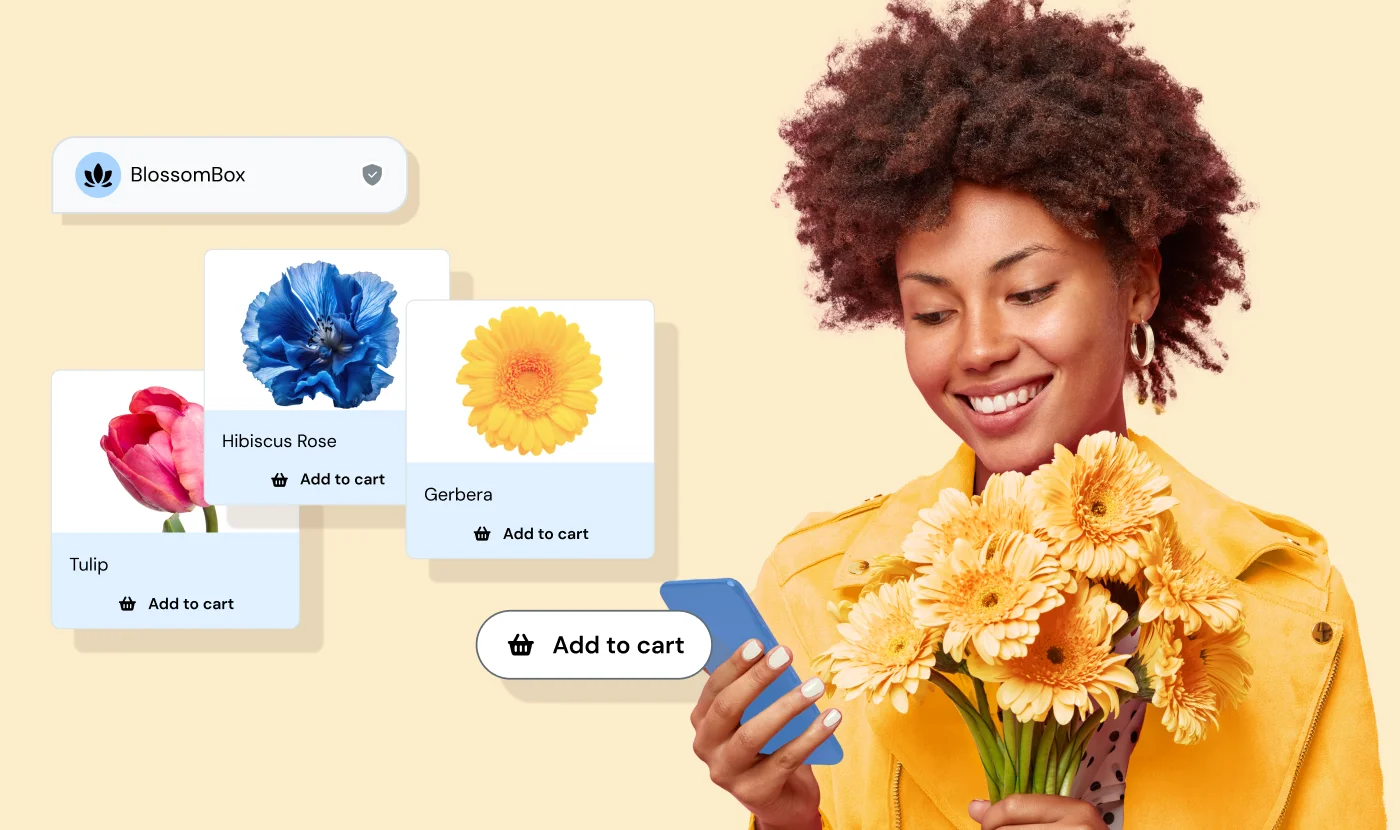
RCS marketing is the practice of using RCS for Business to send branded, interactive campaigns straight to your customers’ native text messaging inbox – think tappable carousels, suggested replies, and a verified sender badge, all where plain texts already land. It is the richest way to reach people who live in their default messaging app – and on campaign engagement and click-through, the numbers below show why it earns a place alongside SMS.
If you already run SMS, MMS, or WhatsApp campaigns, you know each channel’s ceiling – and for plain SMS it’s 160 characters, no branding, and a link customers hesitate to tap. Rich Communication Services (RCS) raises that ceiling without asking anyone to download an app. And in the U.S. specifically, where Meta has paused marketing templates to WhatsApp numbers, RCS has become the practical channel for rich, proactive campaigns.
In this guide, we’ll break down what RCS marketing is, what it adds on top of SMS for campaigns, what good performance actually looks like, the campaign types that work with real brand examples, and how to get started – opt-in and compliance included.
What is RCS marketing?
RCS marketing is the use of RCS for Business (previously called “RCS Business Messaging” or “RBM”) to send engaging, interactive messages to customers’ native text messaging inboxes. It works on Android and, since iOS 18, on iPhone in a growing list of markets – but it is not the same as Apple’s iMessage or Apple Messages for Business.
RCS itself is a messaging standard from the GSM Association (GSMA), built to modernize SMS and MMS. Google has been its biggest champion – Google Messages is the default RCS app on Android – but the standard belongs to the mobile industry, not to any single company. For marketers, the practical difference from plain text is what you can put in a message. Where SMS is limited to plain text and basic branding, RCS lets you include:
- Your brand name, logo, and a verified checkmark in every message
- Rich media – high-quality images, GIFs, and video
- Interactive carousels of up to 10 scrollable cards
- Suggested replies and suggested actions – tap-to-buy buttons, calendar adds, maps, and dialer shortcuts
- Rich cards that pair media, a title, a description, and buttons in one block
Crucially, RCS is complementary to SMS, not a replacement for it. When you send RCS through a provider like Sinch, the platform runs a real-time capability check and, if a device can’t receive RCS, automatically falls back to SMS (or MMS). You get the rich experience where it’s supported and guaranteed delivery everywhere else.

What RCS marketing adds on top of SMS for campaigns
SMS is a workhorse – nearly every phone on earth can receive it, and it’s the reliability layer underneath any modern messaging program. But for campaigns, SMS leaves engagement on the table. RCS for Business messages always come from a branded, verified sender, and richer implementations support long messages, media, and interactivity that plain text simply can’t match.
Here’s how the two compare for marketing:
| Dimension | RCS marketing | SMS marketing |
| Reach | ~1.5 billion users globally, including 250 million in the U.S., where over 1 billion RCS messages are sent daily | Every mobile phone on the planet – the universal baseline and fallback |
| Message format | Rich media, carousels, cards, and buttons | Plain text, 160 characters (add images with MMS) |
| Branding | Every message carries your name, logo, and a verified checkmark | Alphanumeric sender IDs in select markets only |
| Interactivity | Suggested replies, tap-to-buy buttons, in-message forms and maps | One-way text with a link |
| Analytics | Handset delivery receipts, open rates, read receipts, and click data | Basic delivery and failure rates |
| Reliability | Automatic SMS fallback when RCS isn’t available | The fallback itself |
One more reason RCS matters for marketers right now, especially in the U.S.: Meta has paused templated marketing messages to U.S. WhatsApp numbers since April 2025, which means U.S. promotional programs on WhatsApp need the customer to start the conversation first. RCS has no such restriction, so for reaching a U.S. audience with proactive, branded campaigns, it has become the natural rich-messaging choice. (For the full picture, see the special WhatsApp marketing rules for the U.S.)
“With RCS, your messages are branded with your logo front and center, so customers get much more brand exposure each time they hear from you… [They’ll] know it’s really you, so they’ll feel confident tapping the links you send them and taking the actions that you want them to take.”

What good looks like: RCS marketing benchmarks
RCS isn’t experimental – it has nearly two decades of development behind it, and there’s now enough real-world data to set reliable benchmarks. So when you launch a campaign, what does “good” actually look like? Here’s what strong RCS marketing performance typically delivers:
- Open rates above 90%. Around 90% of rich-media RCS messages are opened within 15 minutes of delivery.
- Read rates over 70%. The campaigns featured below cleared 73% to 79% read rates – use that band as your directional target.
- Click-through rates 3 to 7 times higher than rich SMS. Interactivity and branding do the heavy lifting here.
- Conversion rates up to 80% in some use cases. RCS campaigns have shown 80% conversion rates in some business use cases, per Sinch campaign data.
- Engagement time up to 45 seconds per message – plenty of room to tell a product story without a follow-up.
- Average order value (AOV) up around 10%. Interactive RCS campaigns can increase AOV by nearly 10%.
A few reasons those numbers hold up: nearly 80% of consumers say visual indicators like a logo and checkmark increase their trust in a sender’s identity, and RCS usage jumped 111% during the 2024 holiday season versus 2023, with brands seeing 53% open rates. Trust plus reach is a strong foundation for a campaign.
Pro tip: Treat these as directional, not guarantees. Your baseline depends on your list quality, offer, and creative – so use RCS’s richer analytics (read rates, handset delivery receipts, click data) to establish your benchmarks in the first few campaigns, then optimize against them.
And when you need to prove the channel itself is driving the lift – not just better creative – borrow the cleanest test design we see from enterprise messaging teams: split your audience 50/50, send RCS (with SMS fallback) to one half and plain SMS with the exact same content to the other, and check device eligibility in the SMS group so both halves contain RCS-capable phones. Any performance gap that remains is attributable to the channel – the branding, the verified checkmark, the trust – rather than the message. Win that test, and the business case writes itself; then graduate to testing plain text against rich cards and buttons.
RCS marketing campaign types (with real examples)
RCS gives marketers room to be creative across the whole customer journey. Here are the campaign types that consistently perform, each with a brand that ran it and the results they saw.
1. Seasonal sales and holiday promotions
The holidays are peak time for grabbing attention – and rich, personalized messages cut through crowded inboxes. Picard, the French frozen-food retailer, built a conversational RCS holiday menu planner: customers shared dietary preferences, budget, and how much they wanted to cook, then received a personalized menu and a direct link to shop.
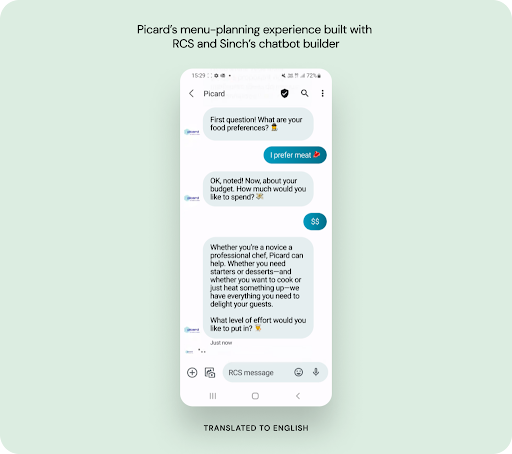
The result? A click-through rate 3 times higher than Rich SMS, 42% higher engagement, and over 10% more clicks to the website – all from a single conversational campaign.
2. Product launches and storytelling
RCS shines when you can show a product instead of just describing it. Clarins, one of Europe’s leading skincare brands, paired a branded profile with striking visuals and clear calls to action for a seasonal gift-set launch. The interactive RCS message hit a 79% read rate and a 22% click-through rate – 2.5 times higher than the same campaign sent via Rich SMS, and roughly 3 times the market average.
3. In-store experiences on mobile
RCS can recreate the feel of personal, in-store service. Printemps, the French department store, ran a personal-stylist experience: customers told a stylist chatbot who they were shopping for and the occasion, and received tailored suggestions right in the messaging inbox. The RCS campaign hit a 75% read rate and drove twice as many site redirects as Rich SMS.
4. Black Friday and Cyber Monday
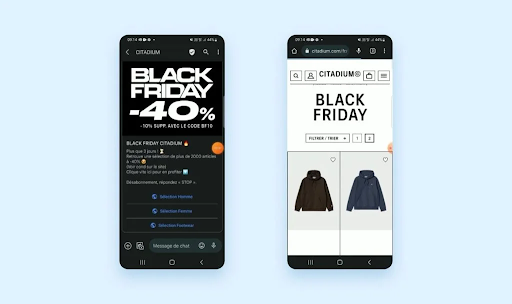
During high-traffic shopping periods, rich, gamified messages cut through crowded inboxes. Citadium, the Printemps Group’s urban-fashion brand, built a gamified Black Friday preview for its “Planet C” loyalty members – a spinning-planet visual hook that opened into a personalized offer on a micro landing page. Running on Rich SMS, the campaign delivered a 16% click-through rate (3 times the 2024 retail average), an 83% reactivity rate, and 87% of visitors continuing to the main site – and Citadium plans to A/B test RCS to push those numbers further.
5. Re-engagement campaigns
Winning back quiet customers is hard – a conversational, branded message helps. Macif, a French insurer with close to 5 million policyholders, used RCS to re-engage contacts in a more relatable way. Compared with previous Rich SMS campaigns, click-through rates rose 100%, and against previous email campaigns, engagement and click-through levels tripled.
Email still has its place, but for time-sensitive news that needs to be seen fast, RCS delivers. Just before Christmas, Micromania-Zing, part of gaming-retail giant GameStop, sent last-minute holiday offers to customers who hadn’t finished shopping. The results: an 86% higher read rate than their email newsletter, a website redirection rate 120% higher than Rich SMS, and a click rate 7 times higher than Rich SMS.
7. Cross-channel bridge campaigns
RCS can also grow your other channels. BUT, a leading French home-furnishing retailer, used RCS to re-energize rebate offers that had been losing steam on Rich SMS. One campaign reached a 73% read rate and a 13.5% click-through rate (1.8 times higher than Rich SMS) and generated €61,000 in additional revenue – 3 times the previous year’s result. Used as part of an omnichannel marketing strategy, a single RCS campaign turned into long-term engagement across channels.
How to get started with RCS marketing
Good news: if you already run SMS marketing, getting started with RCS is a short hop, not a rebuild. Here’s the path.
1. Register and verify your RCS Agent
Your RCS Agent is your brand’s verified identity – the name, logo, colors, and checkmark customers see. You set it up in Sinch Build and submit it to Google and carriers for approval. You’ll need company details (legal name, address, EIN/Tax ID), brand assets (logo and hero image to spec), live URLs for your website, privacy policy, and terms, plus proof of opt-in and your opt-out text.
2. Confirm opt-in and connect a fallback
RCS marketing requires consent, just like SMS. The good news? You can reuse the same SMS opt-in you already collect. You’ll also register an SMS sender ID so messages fall back to text when a device can’t receive RCS.
3. Choose your use case
Decide whether a campaign is a one-way notification or a two-way conversation, and start from a clear goal – a seasonal promotion, a product launch, a re-engagement push. The format should follow the objective, not the other way around.
4. Integrate and send
Connect RCS to your stack through Sinch Conversation API for full programmatic control, or – if you’re an existing SMS customer – use RCS Upscale, which delivers RCS when a device supports it and SMS when it doesn’t, with no new integration. Prefer no-code? A platform like Sinch Engage runs RCS campaigns alongside integrations with tools like Salesforce, HubSpot, and Shopify.
5. Test, track, and optimize
RCS gives you far richer data than SMS – read rates, handset delivery receipts, opens, and clicks. Segment your audience, personalize the message, and A/B test creative and timing. Then let the data tell you what “good” looks like for your brand.
RCS marketing opt-in and compliance basics
RCS is built on trust, so the compliance basics are non-negotiable – and, handled well, they’re a competitive advantage.
- Get explicit opt-in. Only message people who’ve asked to hear from you, and make opting out just as easy. Respecting preferences is what keeps engagement high.
- Stay within the rules. RCS content must comply with Google’s Acceptable Use Policy; certain categories (like regulated goods and political content) are off-limits for verified agents.
- Know the security model. RCS for Business messages are encrypted in transit (TLS between hops) and carry strong compliance credentials – ISO 27001, SOC 2, SOC 3, GDPR, and PSD2. They are not end-to-end encrypted, though, and Google and aggregators can access content. That’s fine for marketing and notifications, but for confidential data with HIPAA or PCI-DSS requirements, use a channel with end-to-end encryption instead.
- Verify to build trust. The verified sender badge isn’t just branding – it directly reduces spoofing and smishing risk, which is exactly why 59% of consumers say they prefer RCS over SMS or MMS for verification-style messages.
Frequently asked questions about RCS marketing
Yes – for campaigns, it’s one of the strongest channels available. RCS combines the reach and reliability of SMS with the interactivity of an app, delivered natively to the inbox your customers already use. Around 90% of rich-media messages are opened within 15 minutes, click-through rates run 3 to 7 times higher than rich SMS, and conversion rates have reached 80% in some use cases, all from a branded, verified profile.
Yes, on iPhones running iOS 18 or later, where Apple added RCS support. RCS for Business on iOS is rolling out in key markets and depends on Apple and carrier support, so coverage varies by country. On any device that can’t receive RCS, Sinch falls back to SMS automatically, so your campaign still lands.
RCS is priced per message or per session, and basic RCS messages are typically comparable in cost to SMS, with richer conversational sessions priced differently. Because you can start from your existing SMS program with RCS Upscale, you don’t need a costly overhaul to begin.
Yes. Like SMS, RCS marketing requires customer consent before you send promotional messages, and you must make opting out easy. In most cases you can reuse the same opt-in you already collect for SMS.
Yes – the U.S. is one of RCS’s strongest markets, with 250 million users and over a billion RCS messages sent daily. It’s also a practical rich-marketing channel there right now, since WhatsApp marketing templates to U.S. numbers are paused, which limits proactive promotional messaging on that channel.
Get started with RCS marketing
RCS marketing lets you reach customers where they already are, with messages they can trust and experiences that drive action – across the entire customer journey, from first promotion to loyalty. The brands seeing the best results, from Picard to BUT to Macif, didn’t overhaul their stack. They upgraded the campaigns they were already running and let SMS fallback handle the rest.
Conversational, interactive messaging is how modern brands connect, convert, and keep customers coming back. With one integration through Conversation API, or no-code campaigns through Sinch Engage, you can launch RCS marketing from a single place.
Want to go deeper first? Explore these resources:
- What is RCS messaging? The complete guide
- 10+ RCS use cases and messaging examples for your business
- RCS business message types explained
- RCS vs SMS: What’s the difference?
- RCS statistics: 30 things you need to know
Ready to build RCS marketing into your strategy? Or, if you’d rather make the business case to your team first, our RCS business case guide walks through ROI, tech lift, and quick wins. Reach out to our team – we’re excited to help you take your conversational marketing to the next level.

Author: