Looking for a MessageMedia page? If you are and were redirected here, it's because MessageMedia is rebranding to Sinch Engage. Learn more about our rebrand.
SMS VERIFICATION
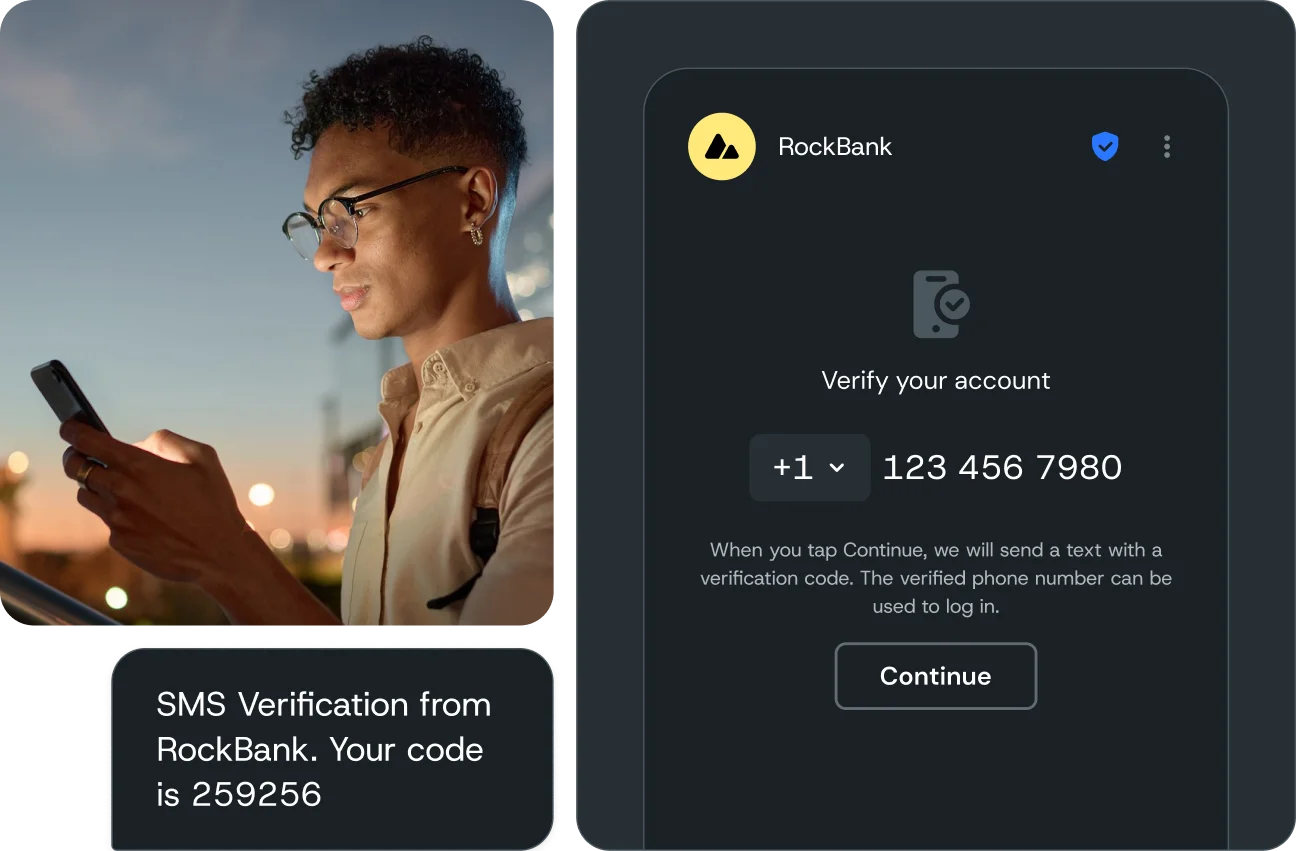
One-time passcodes via SMS take the headache out of identity verification. Sinch Engage delivers OTP messages globally with the reliability your authentication flows depend on. It’s perfect for account sign-up, login verification, and right-of-use confirmation for mobile Sender IDs.
THE WORKFLOW
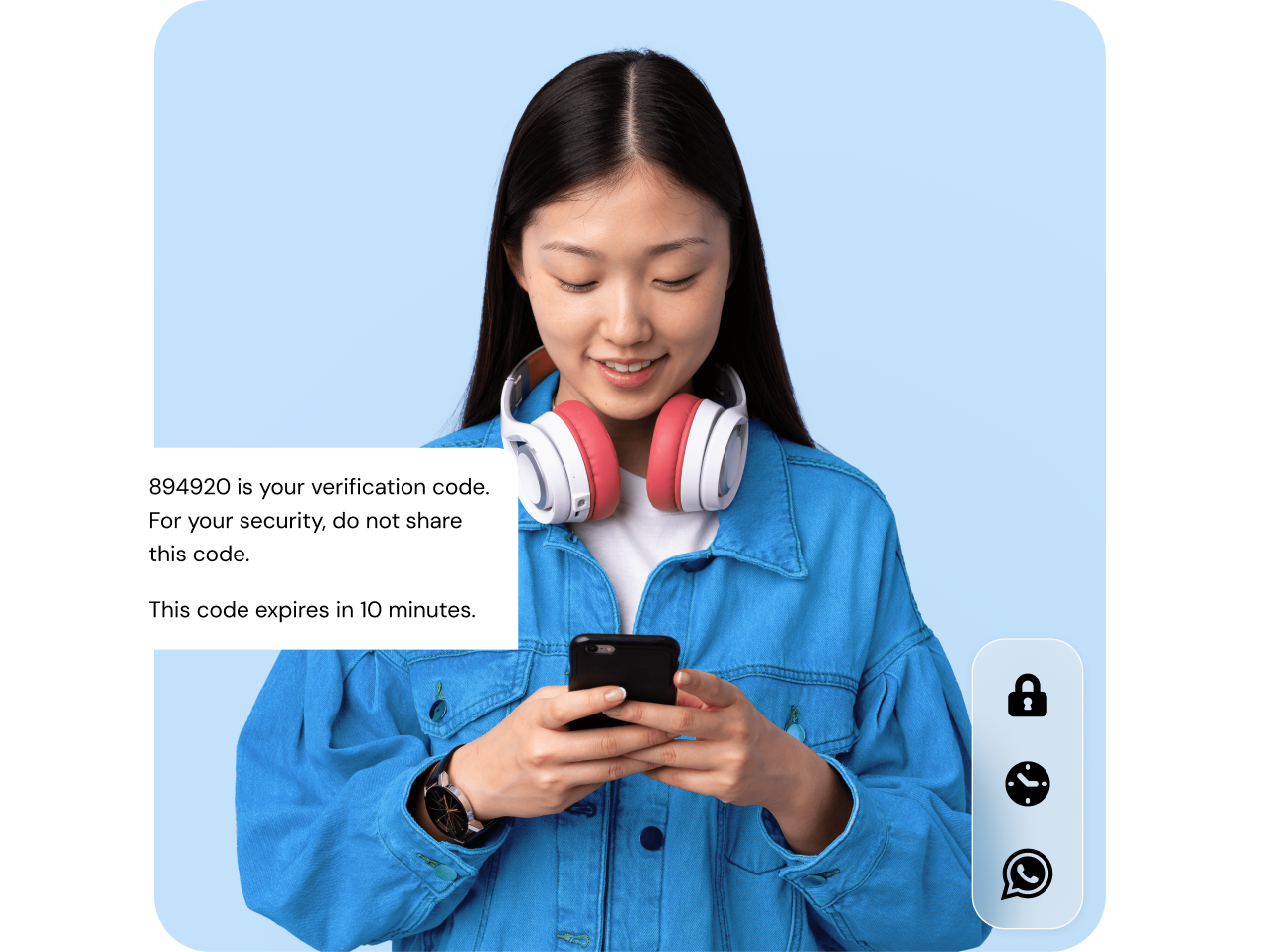
Nobody wants their identity stolen or their account compromised. With SMS verification, you add a possession check to your authentication flow to cut down on unauthorized account access. It also supports identity-proofing requirements in authentication workflows.
How it works:
Your application requests verification for a phone number
The SMS verification service sends a one-time passcode to that number
The user enters the code in your application
Your application checks the code before completing the requested action
COMPLIANCE BASICS
Using your own number means messages come from one consistent place. That makes it easier for recipients to recognize the sender and save the number.
If you send SMS messages using U.S. long codes, 10DLC registration isn’t optional. Registering helps reduce spam, protect consumers, and improve overall trust in messaging channels. Opt-out requests must be honored within two days, and complaint rates should stay below 0.1%.
WHERE IT WORKS
SMS verification can help in a variety of authentication and account security workflows.
CAPABILITIES
FAQs
An SMS verification service sends a one-time passcode (OTP) via text message to a user’s mobile phone number. Your application uses it to confirm the user controls that number.
Your application requests verification for a phone number. The SMS verification service sends a one-time passcode by SMS, and your application checks the code the user enters.
Common SMS verification service use cases include new-account registration, two-factor authentication at login, and password resets. They can also include transaction confirmation and re-verification after inactivity.
Using your own number means all messages are sent from a single, consistent number. That makes it easier for recipients to recognize who the message is from and save the number for future reference.
10DLC stands for 10-digit long code. If you send SMS messages using U.S. long codes, 10DLC registration isn’t optional — it’s essential.
Typically, accounts are verified in 1–2 hours. During high-demand periods, verification can take up to 24 hours.
Opt-out handling requires honoring unsubscribe requests within two days. Complaint rates should stay below 0.1%. Registration is intended to reduce spam, protect consumers, and improve overall trust in messaging channels.
Yes, in supported countries. You need access to the mobile device for that number so you can verify right of use, and you re-verify every 12 months.
Supported countries include Australia, Austria, Croatia, Cyprus, Denmark, Estonia, Finland, Germany, Ireland, Italy, Latvia, Lithuania, Luxembourg, Malta, Norway, Portugal, Slovenia, Spain, Sweden, Switzerland, the Netherlands, and the United Kingdom.
If you’re sending SMS messages using U.S. long codes, 10DLC registration is essential. Unregistered messages can face filtering and delivery restrictions.