Resources
Is your SMS messaging HIPAA-compliant in the US?
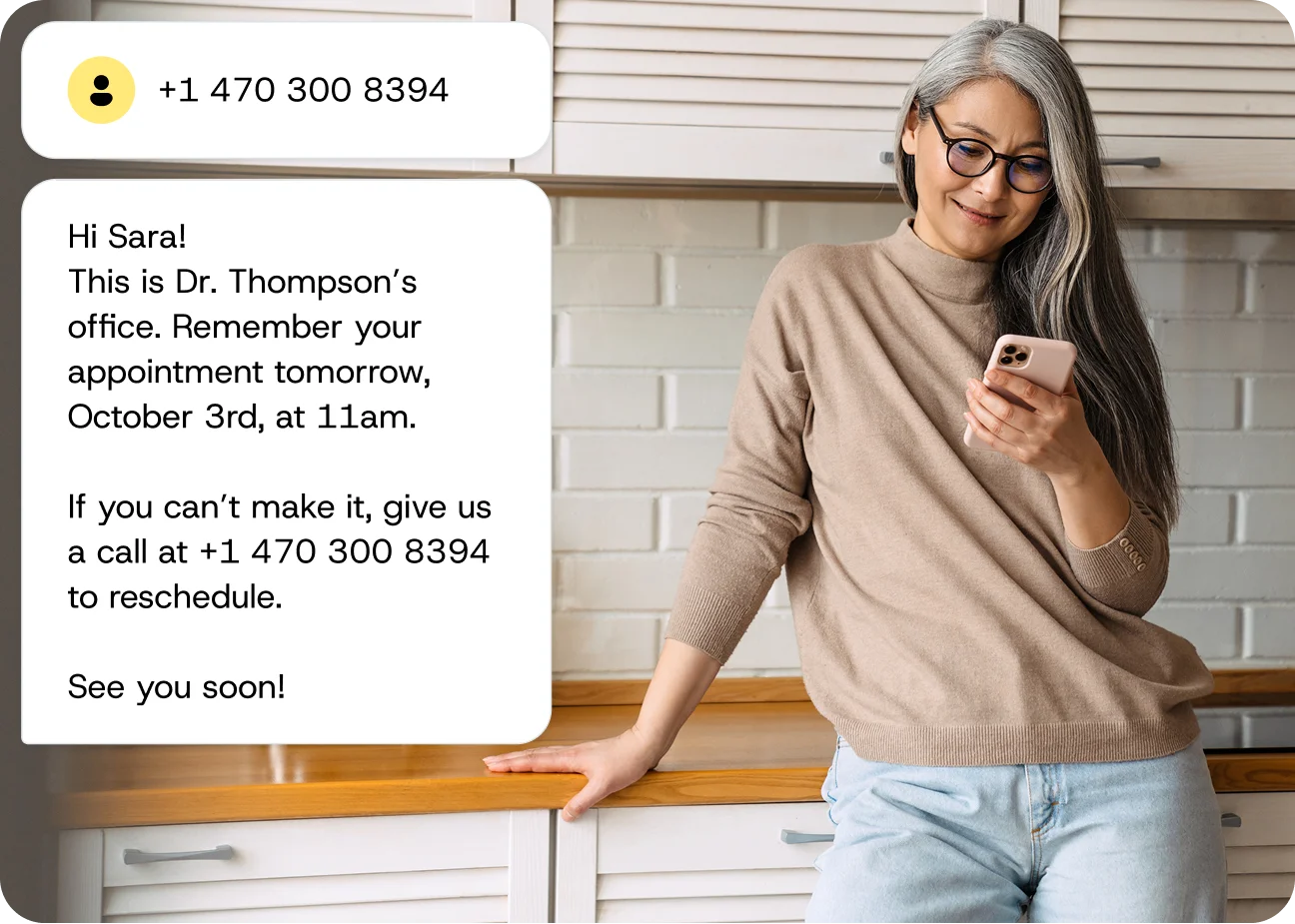
As studies prove that text messaging is an effective and efficient tool for communication strategies, many healthcare organizations, hospitals and systems are beginning to follow suit. There are numerous ways it can help grow your practice, uplift attendance rates and improve patient outcomes.
If you’re sending healthcare text messaging in the US, additional conditions must be considered. While businesses are most concerned about meeting FCC regulations, healthcare systems sending to US citizens or mobile numbers should also be aware of HIPAA regulations.
The United States’ Health Insurance Portability and Accountability Act (HIPAA) states that a patient’s protected health information (PHI) must stay protected by healthcare providers and covered entities who utilize electronic communications such as SMS. If HIPAA compliance isn’t followed, your business or practice could face substantial penalties. According to the HIPAA journal, a single breach could cost up to $50,000 USD.
Is SMS texting HIPAA compliant?
Because patient information, including personal identifiers, requires additional protection and security measures to ensure privacy, SMS is not always HIPAA-compliant. According to the HIPAA security rule, encryption is a crucial requirement for the transit of electronic communications between patients and providers. It is up to healthcare providers and practices to ensure their messaging content complies with HIPAA rules.
Top tip: encryption means data gets concealed by converting it into a code.
Top tip: encryption means data gets concealed by converting it into a code.
SMS technology did not initially get built for messages to get sent with encryption. This means that other users may gain unauthorized access to sensitive information, such as PHI, through illegal or accidental means.
Best practice tips to send secure HIPAA SMS
In 2013, HIPAA enacted a final omnibus ruling stating that as long as healthcare providers adhered to three specific conditions, they could send PHI over unencrypted emails. In 2018, the Director of the HIPAA enforcement agency, Roger Severino, came out to say he believes the same rules should apply to text messaging and other forms of communication.
To send and receive PHI communications to patients over unencrypted channels, the provider must inform the patient of the encryption risk, gain authorization that the patient is willing to accept the risk, and document the patient’s consent.
Additionally, we also recommend healthcare providers follow these best practices:
- Acquire and document consent for all communications
- Check and maintain correct phone records by requiring 2FA (2-factor authentication) when first onboarding
- Send SMS reminders to patients to update their contact details regularly
- Always include the option for patients to opt-out of receiving SMS
- Make communications single purpose (i.e. do not combine appointment reminders and marketing in the same message)
- Educate and train all healthcare staff on the proper use and misuse of SMS messaging (as well as what constitutes a HIPAA violation)
Keep in mind, if healthcare communications do not contain PHI, HIPAA rules don’t apply.
Note: This article is not legal advice. Sinch Engage will not be responsible for any reliance or action you take due to this article’s content.
Examples of HIPAA-compliant text messages
Despite the stringent rules around sending secure text messaging in healthcare, there are many ways you can still comply with HIPAA regulations. If you send a message that pertains directly to a patient’s health but does not contain PHI, it is exempt from requiring a patient’s consent. Here are a few samples of secure healthcare text messages.
1. Appointment confirmations
TEMPLATE: Hi {NAME}, your appointment on {DATE} with {DOCTOR} is now confirmed. If you need to reschedule, please reply Y or text STOP to opt-out.
2. Prescription reminders
TEMPLATE: Hi {NAME}, this is a reminder that you will need to refill your {MEDICATION} prescription soon. You have 2 scripts left. Txt STOP to opt-out.
3. Patient follow-ups
TEMPLATE: Hi {NAME}, this is Jan from {DOCTOR}’s office. How are the new medications going? If you are experiencing headaches, please stop taking them immediately. Txt STOP to opt-out.
4. Staff communications
TEMPLATE: Hi {NAME}, we need someone to cover a shift tomorrow from 9 AM till 2 PM. Are you available? Text back Y or STOP to opt-out.
Other advantages of texting in the healthcare industry
Sending healthcare communications can be very beneficial to your practice. Consider all the different ways you can use Sinch Engage to engage with and create better relationships with your patients. Make sure to check out:
- Grab more ready-to-use SMS templates
- Check out our guide on SMS for healthcare services

Author: