Sinch Agentic AI talks to your customers on voice, WhatsApp, SMS and email, acts inside your systems, and keeps going until the outcome is achieved – a sale closed, a payment collected, a case resolved.

Sinch Agentic AI talks to your customers on voice, WhatsApp, SMS and email, acts inside your systems, and keeps going until the outcome is achieved – a sale closed, a payment collected, a case resolved.
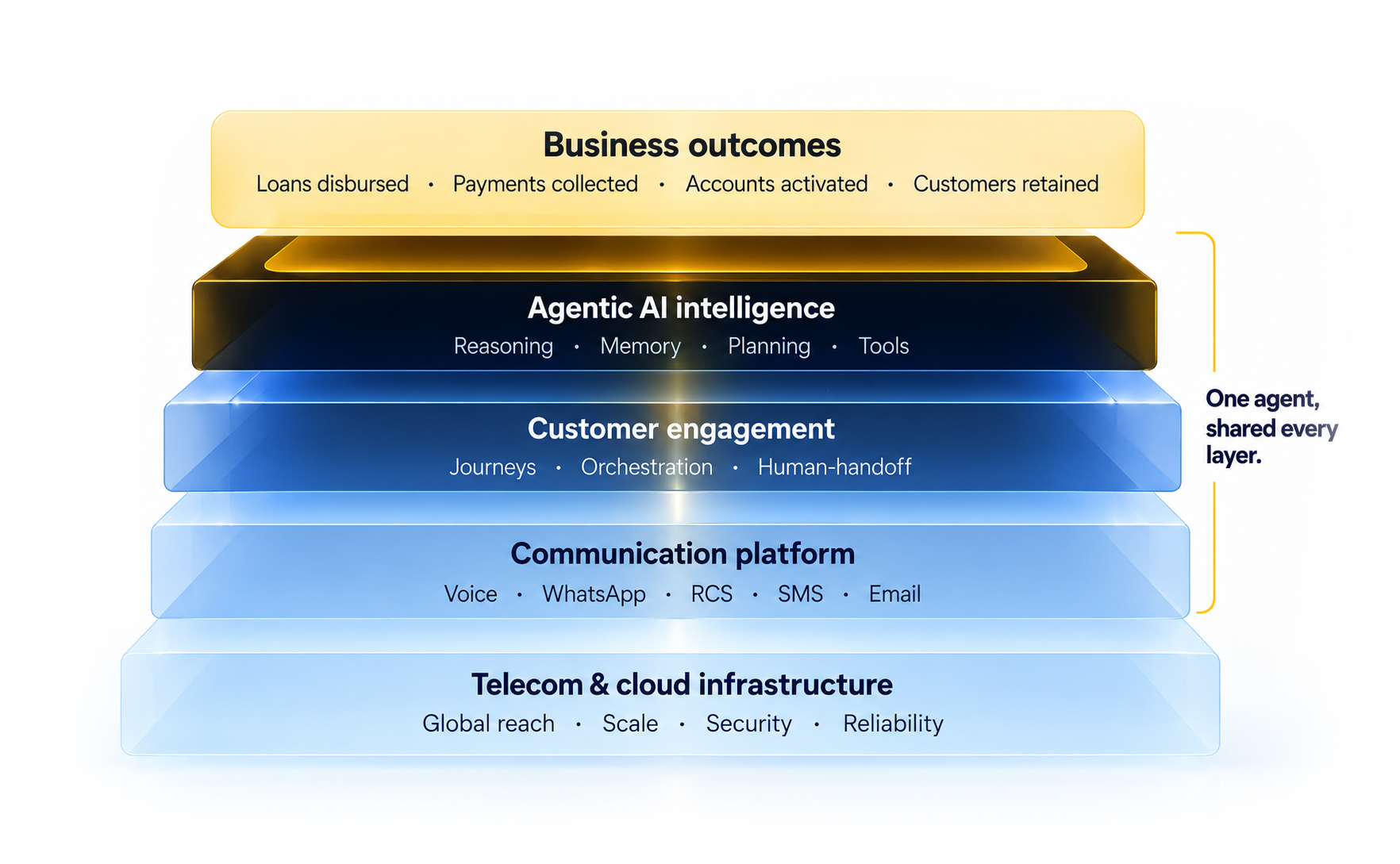
Reasoning, engagement and delivery in one system – so an agent can decide what to do next, do it on the right channel, and see what happened
How it actually runs
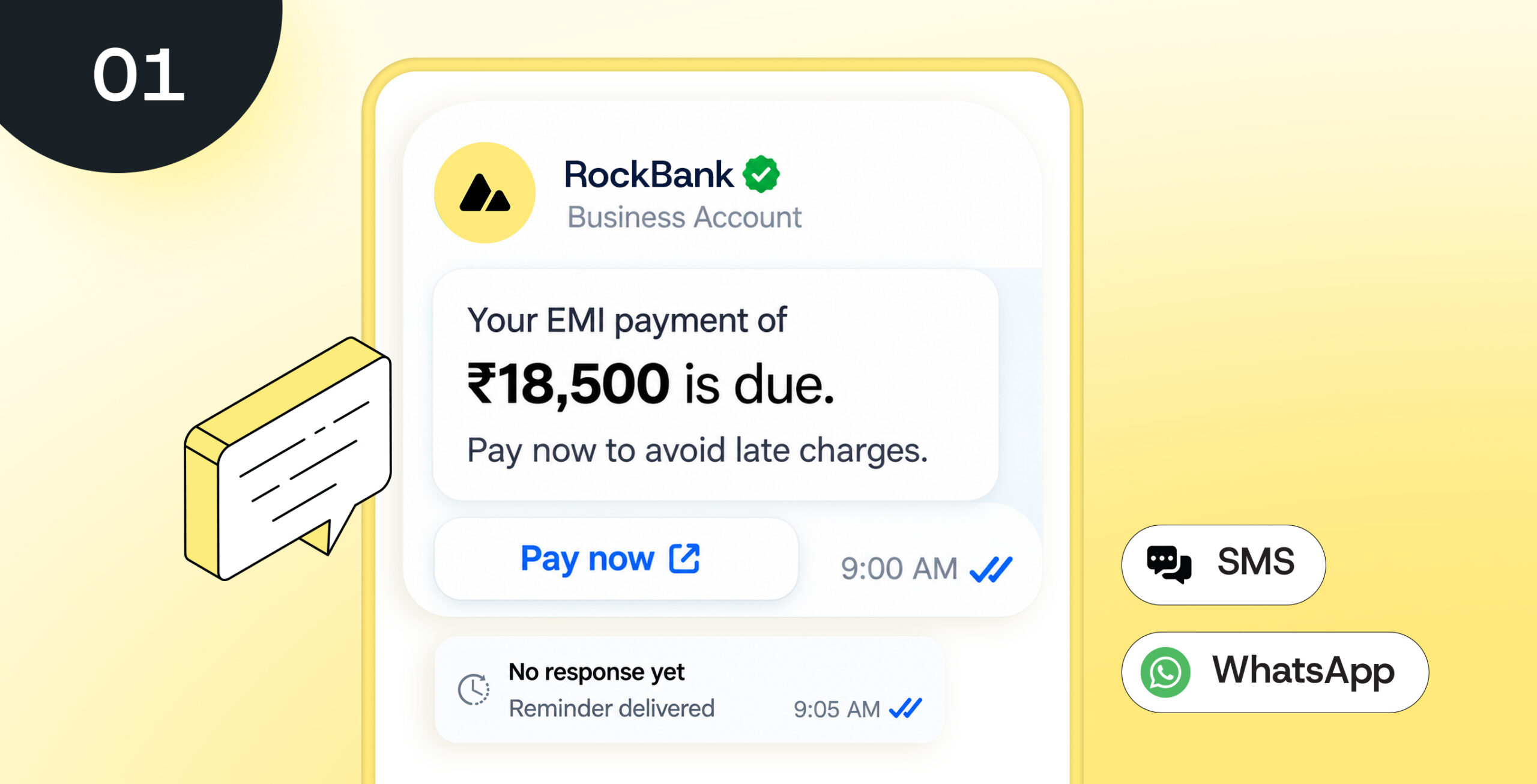
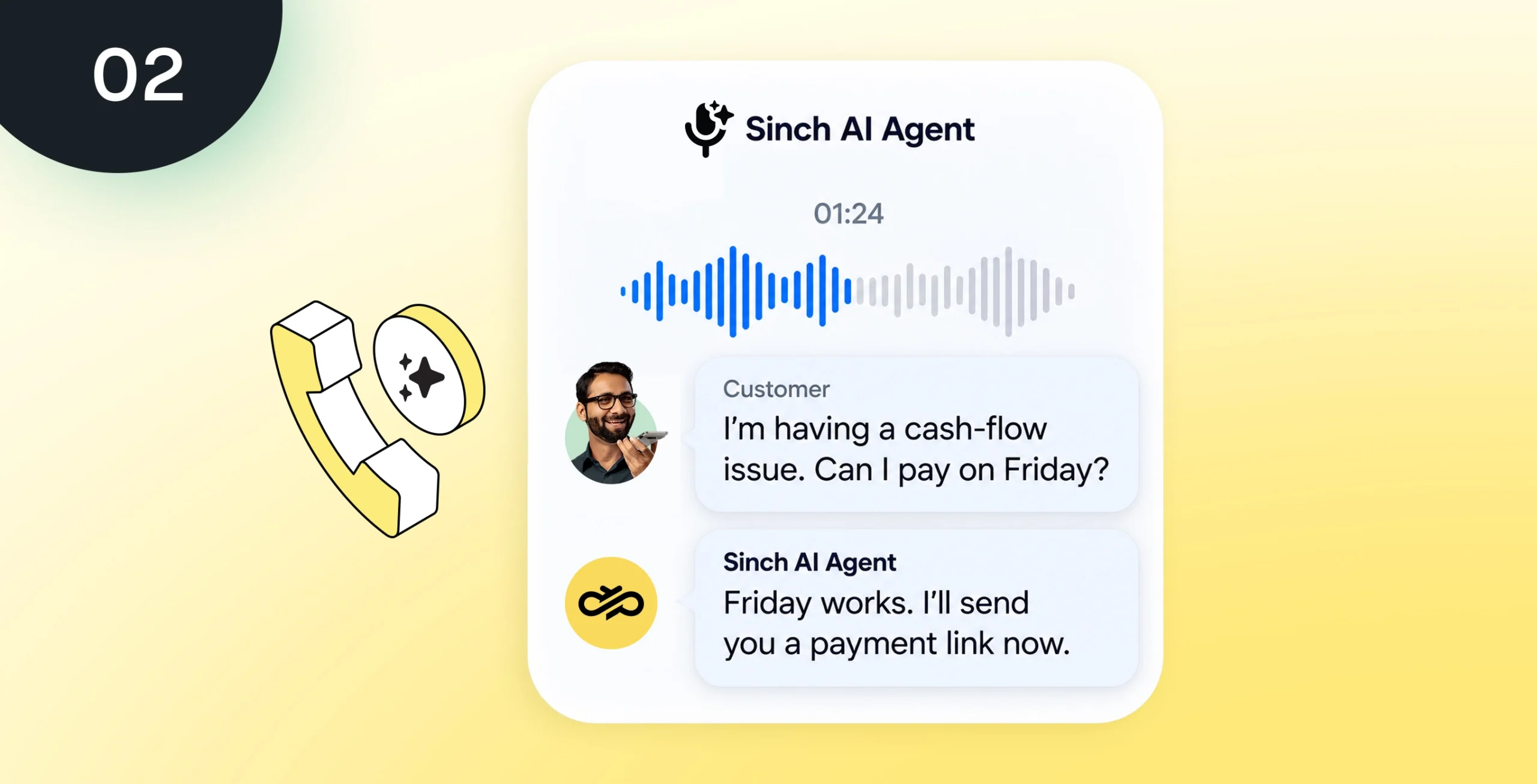
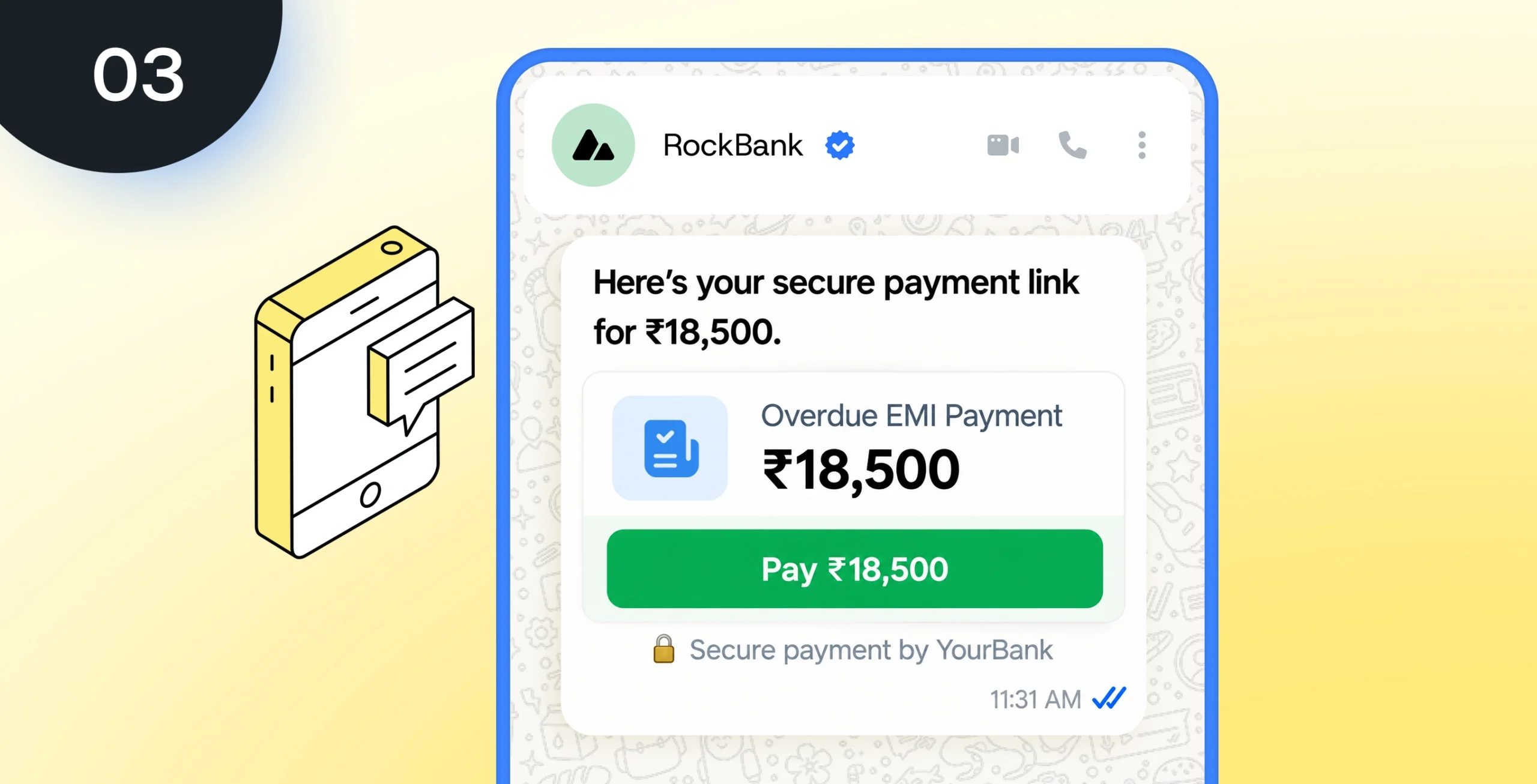
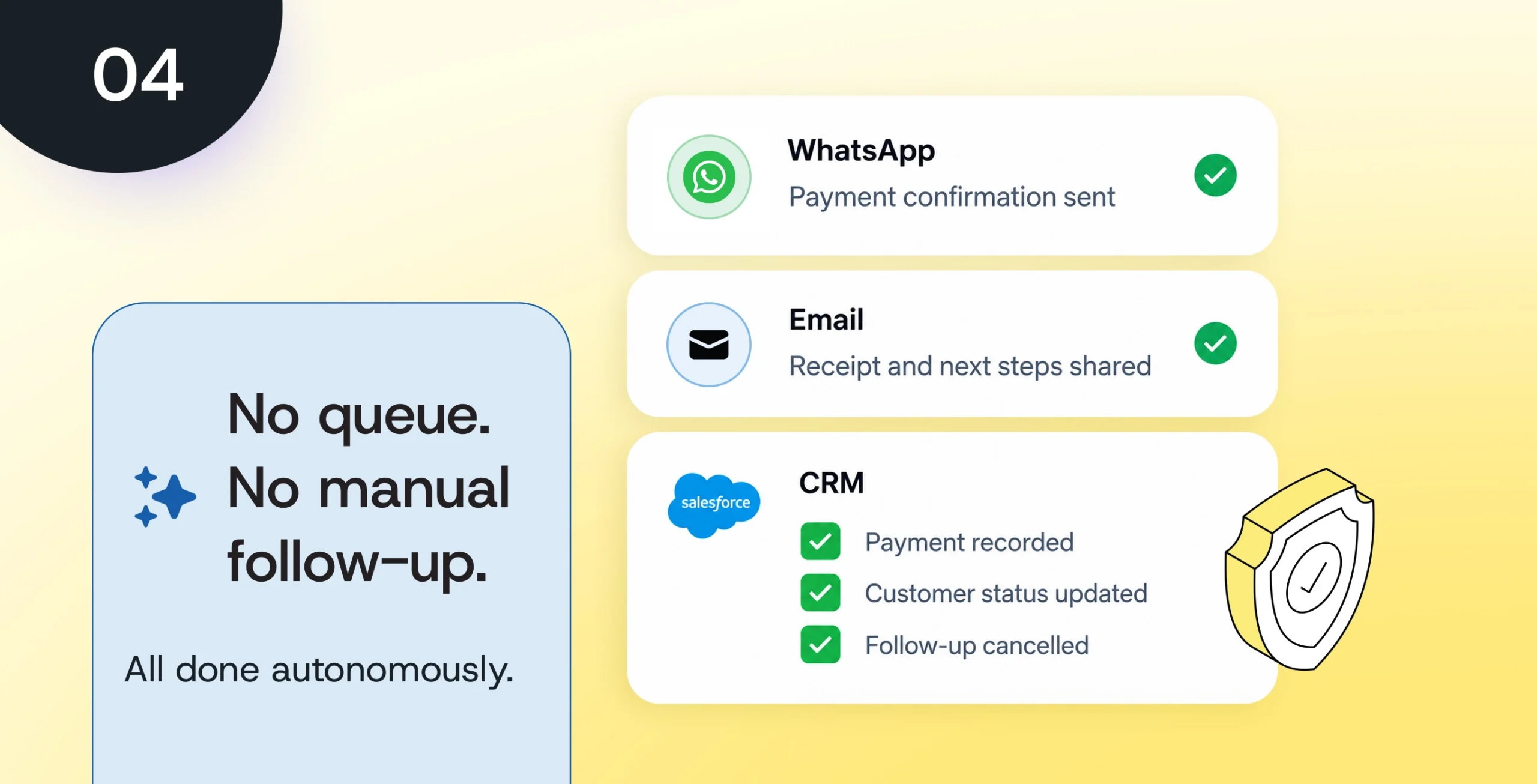
An example – an overdue payment, start to finish. One conversation, no repeated explanations, no manual queues.
Use Cases
Any process that repeats at volume, follows rules you can write down, and ends in a system you already own.
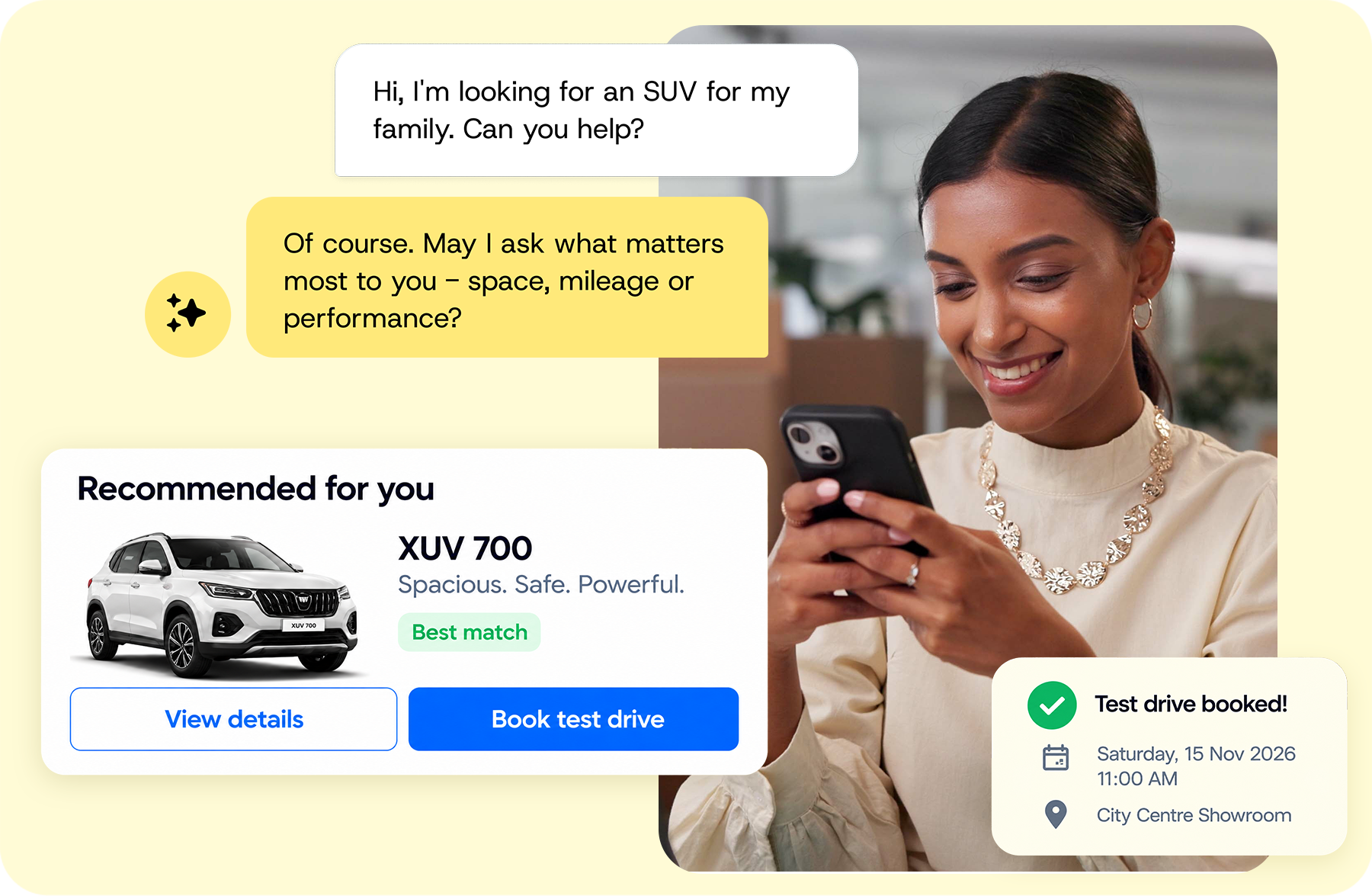
Qualify every lead in seconds, explain the product, negotiate inside your limits, and carry it through a closed sale. (Loan applications · Policy quotes · Test drives · B2B enquiries)
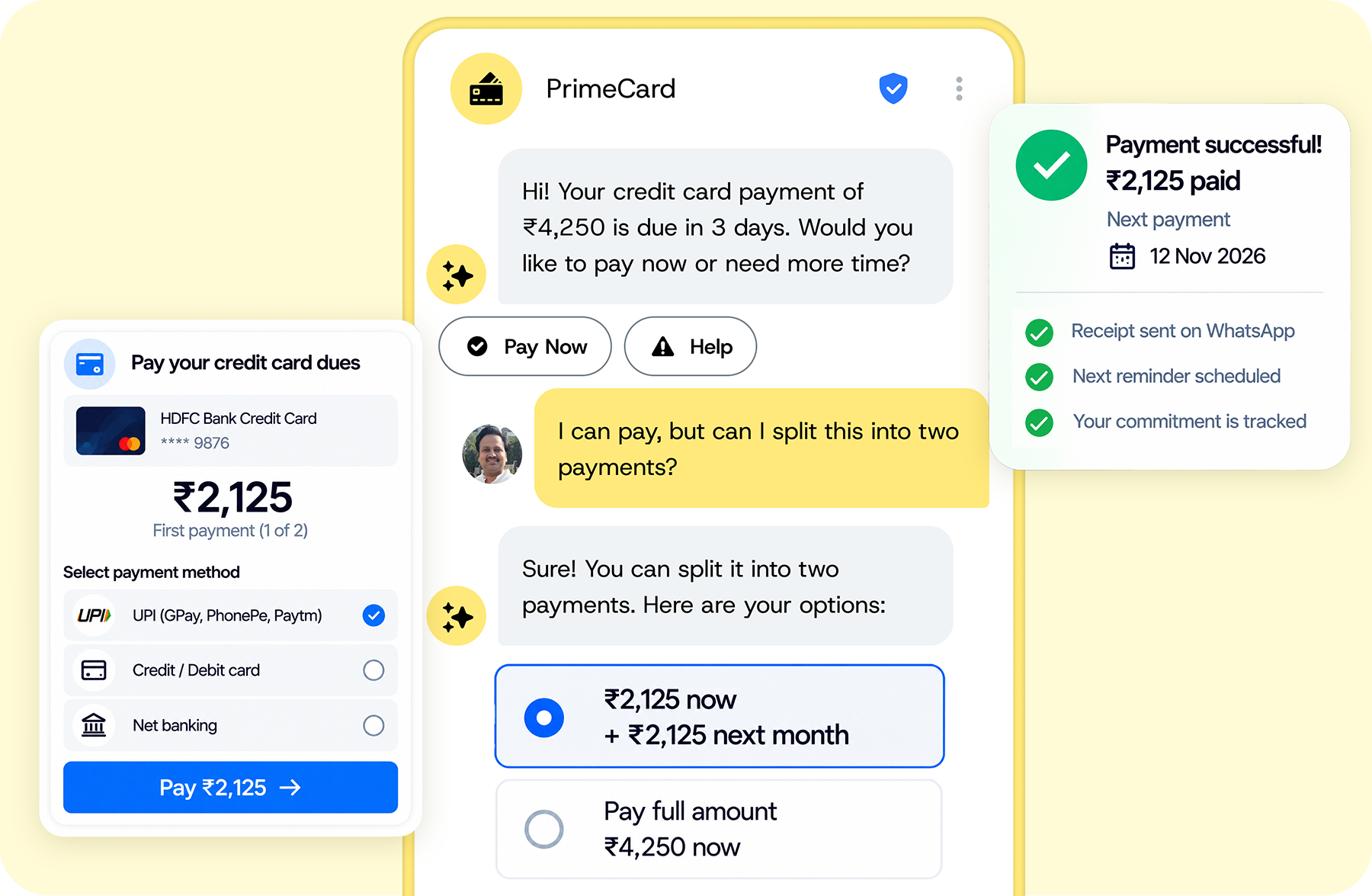
Nudge before the due date, negotiate like a person, take payment inside the conversation, and chase every promise made.
(EMIs · Premiums · Invoices · Subscriptions · Utility bills)
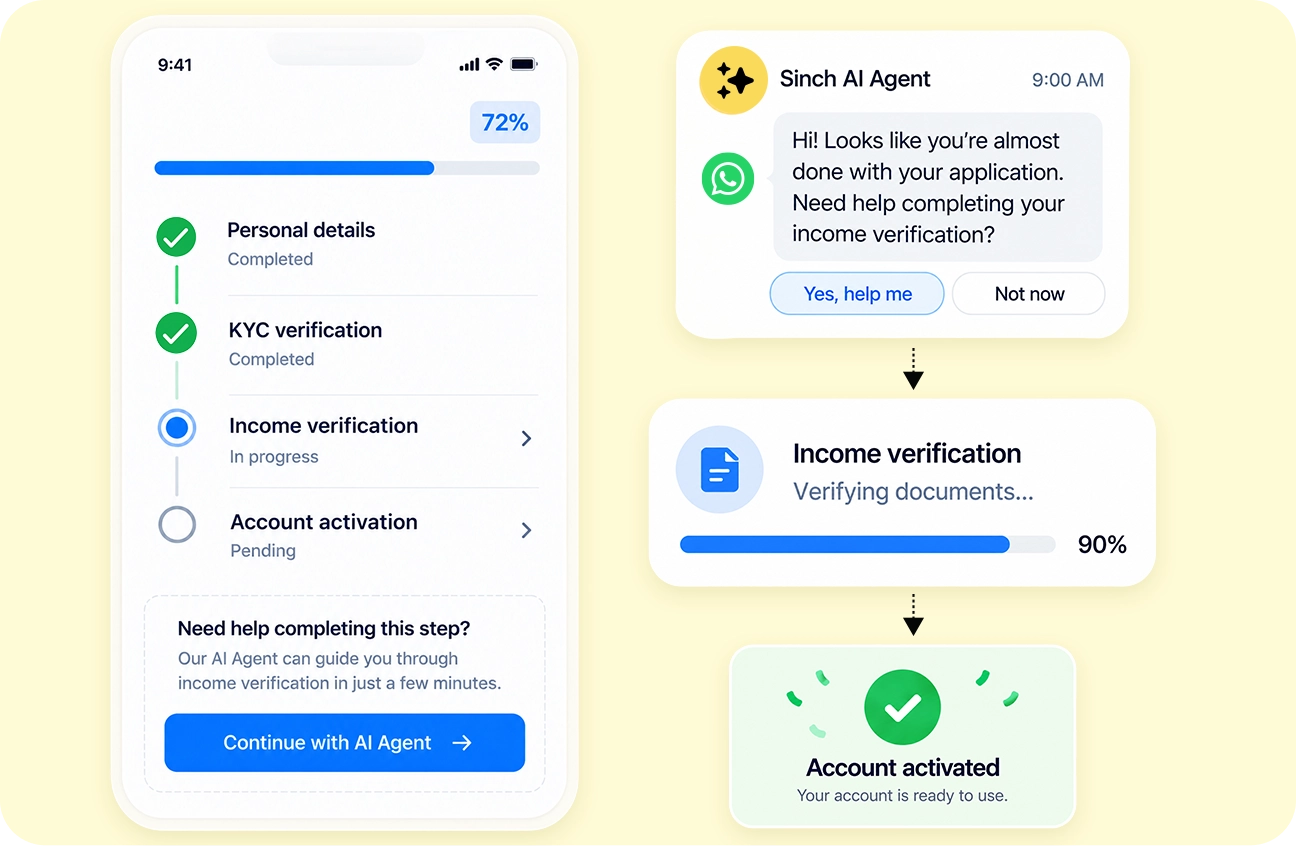
Walk customers through documents and verification, catch them the moment they drop off, and get them actually using what they bought.
(KYC · SIM activation · Policy issuance · Software setup)
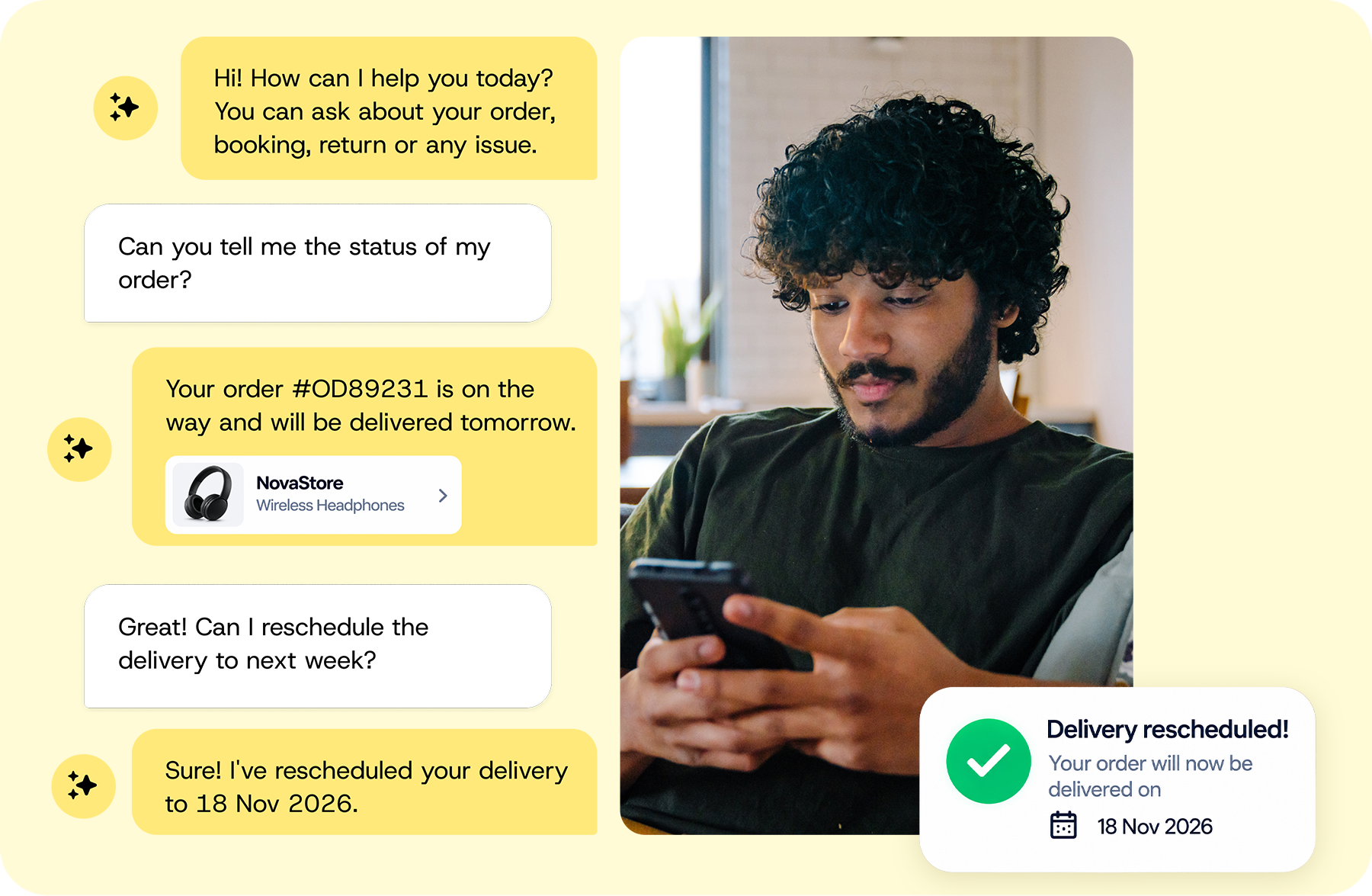
Answer status and account questions around the clock, in your customer’s language, and win renewals back before they lapse.
(Order status · Claims · Bookings · Renewals · Complaints)
Start with clear boundaries. Build trust, then expand autonomy.
Sinch Agentic AI keeps your voice, WhatsApp, RCS, SMS and email on the same infrastructure as your agent—so it knows what happened and decides what to do next.

Your customer picks up a call, replies on WhatsApp two days later, and nothing starts over.

Your CRM, ERP, billing, order and verification systems stay exactly where they are — core banking and LOS included.

The model underneath is swappable. What your agent is allowed to do doesn’t change when it is.
AI that decides and acts to finish a task, instead of only answering. The system is given an outcome, chooses the next step – which channel, which hour, whether to escalate – and keeps working inside rules you write until the outcome lands or a rule stops it.
A chatbot answers a question and hands your customer to a queue. An agent owns the outcome: it calls, messages, acts inside your systems and keeps following up until the process is finished. A chatbot talks, a copilot helps your staff, an agent does the job.
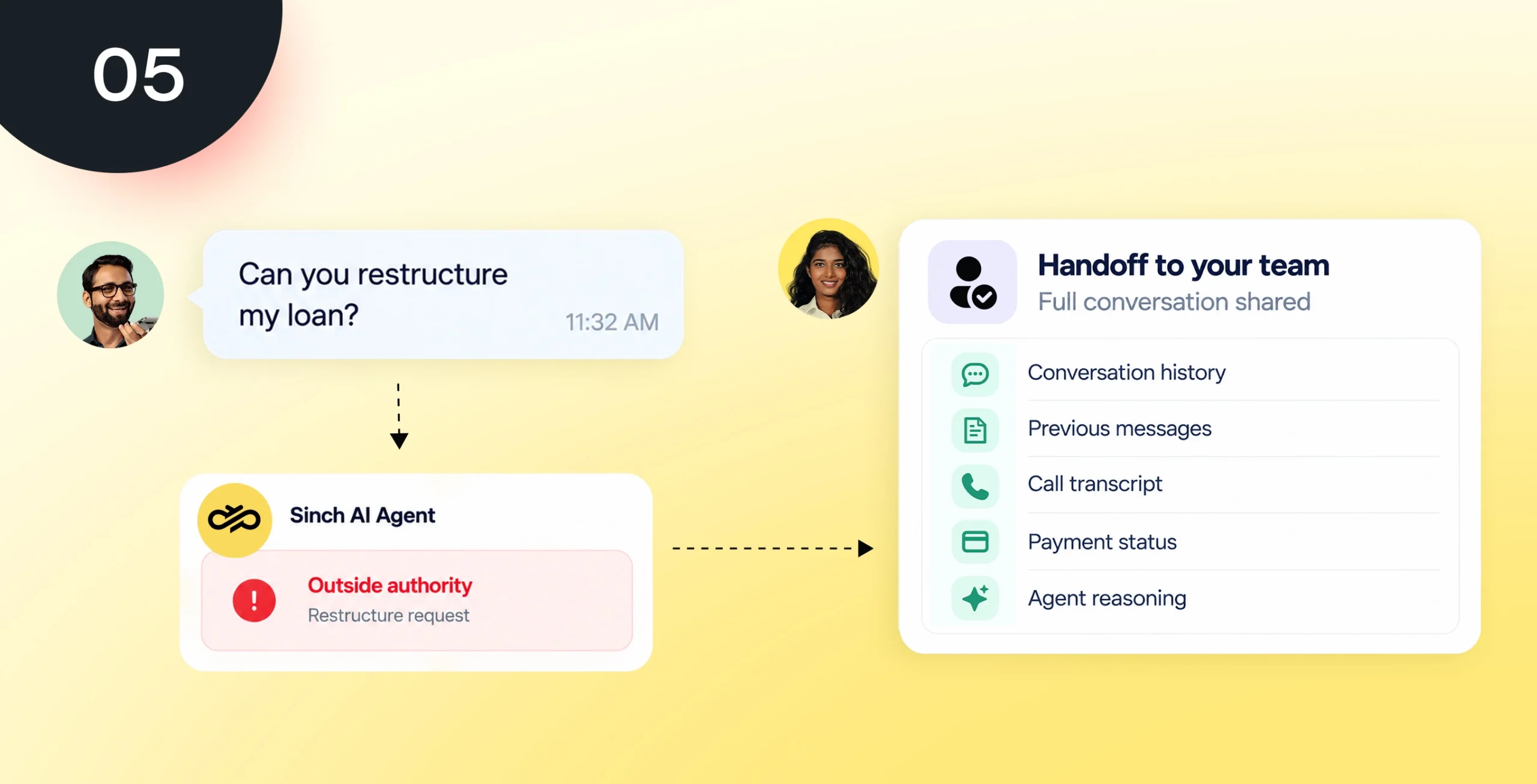
Authority caps and human gates that you set. Every agent has a ceiling on the largest concession, discount or restructure it may offer alone. Beyond the limit, it stops and waits for your person. Every decision is written to a trace with its reason attached, so your risk and compliance teams can read what it did and why.
The intelligence layer is pluggable and the model is selected per task. If a better or cheaper model appears, or your policy requires a specific one, your rulebook and your agents don’t change. What matters to you is the rulebook and audit trail around the model, not the model brand.
Wherever your policy allows — Sinch-hosted, your own cloud perimeter, or a split where sensitive data never leaves your side. Residency is a deployment choice, not a re-architecture.
It starts in English and switches the moment your customer replies in another language — including mid-sentence Hinglish, on text and on voice. Everyday conversation in India code-switches constantly, and an agent that can’t follow the switch feels robotic to the customers who most need the service.
It takes the repeatable volume. Your people keep hardship, disputes and judgement — the cases where a human actually changes the outcome. Most teams start with tight limits and widen them as the trace earns trust.
Weeks, not quarters. A pilot runs on your own data on a limited segment, measured against how you do it today. The exact plan comes from a solutions call, scoped to your systems and integrations.
Your CRM, ERP, order management, billing, payment and verification systems, through APIs and events – including core banking and loan origination systems where that’s your stack. The agents work across those systems; they don’t replace them.
Agents are in production with enterprise clients across sales, onboarding, payments and service. Named references come through your account team under NDA.
Let’s talk possibilities!